
The U.S. Department of Veterans Affairs has acknowledged that veterans who served in the Republic of Vietnam between 1962 and 1975 were likely exposed to tactical herbicides such as Agent Orange. The VA regulations mandate that any Vietnam era veteran who served (or, now, in some other areas where Agent Orange was stored or sprayed) during the relevant time period is presumed to have experienced Agent Orange exposure.
Agent Orange Vietnam locations determine whether VA recognizes Vietnam-era herbicide exposure based on geography. Veterans with qualifying land service in Vietnam, inland-waterway service, brief shore visitation, or Blue Water Navy service inside the statutory offshore zone fall within VA’s Vietnam location rule.
How Was Agent Orange Used in Vietnam?
Herbicide spraying in Vietnam began with the first Operation Ranch Hand missions on January 12, 1962, and the last U.S.-authorized helicopter herbicide operation was flown on October 31, 1971. NASEM’s Veterans and Agent Orange reports that the U.S. Air Force sprayed nearly 19 million gallons of herbicides in Vietnam from 1962 through 1971, including at least 11 million gallons of Agent Orange.
Agent Orange (a 50:50 mixture of 2,4-D and 2,4,5-T, with the 2,4,5-T component containing traces of TCDD) was one tactical herbicide among several color-coded herbicide formulations, known as the rainbow herbicides.
Agent Orange and other tactical herbicides were used over forests near the demarcation zone, forests near the junction of the Cambodian, Laotian, and South Vietnamese borders, mangroves on Vietnam’s southernmost peninsula, shipping channels southeast of Saigon, and military base perimeters, roadways, and communication lines.
Was Agent Orange Sprayed Only from Aircraft?
An estimated 10% to 12% of the total herbicide volume used in Vietnam was applied from the ground rather than from fixed-wing aircraft. Ground application included backpacks, boats, trucks, and buffalo turbines.
Which Vietnam Locations Qualify for Agent Orange Exposure?
The VA recognizes service on land in Vietnam, aboard a vessel operating on Vietnam’s inland waterways, or aboard a vessel operating within the Blue Water Navy offshore zone. VA’s current Agent Orange eligibility rule covers qualifying Vietnam service for any length of time between January 9, 1962 and May 7, 1975.
A mechanic at an airfield, a medic at a treatment facility, a clerk at a headquarters, an aircrew member who landed in Vietnam, and an infantry soldier can have very different service histories. But they don’t have to identify the aircraft, spray mission, drum, or military unit that caused the exposure. For the Vietnam location rule, the first question is whether the records place the veteran in a qualifying Vietnam location during the covered dates.
Does a Short TDY Stop or Refueling Layover in Vietnam Qualify?
VA requires service for any length of time in the Republic of Vietnam, so a documented single day or brief stop inside the January 9, 1962 to May 7, 1975 window can qualify a veteran for the Agent Orange presumption if orders, flight records or unit records establish the date and the location.
Brown Water vs. Blue Water Navy Service
Brown Water Navy service refers to service on vessels operating on Vietnam’s inland waterways, which VA treats as Vietnam service for location purposes. River patrol boats, swift boats, and vessels that operated on rivers, canals, deltas, and similar inland waterways fall into a separate location category from large open-sea vessels.
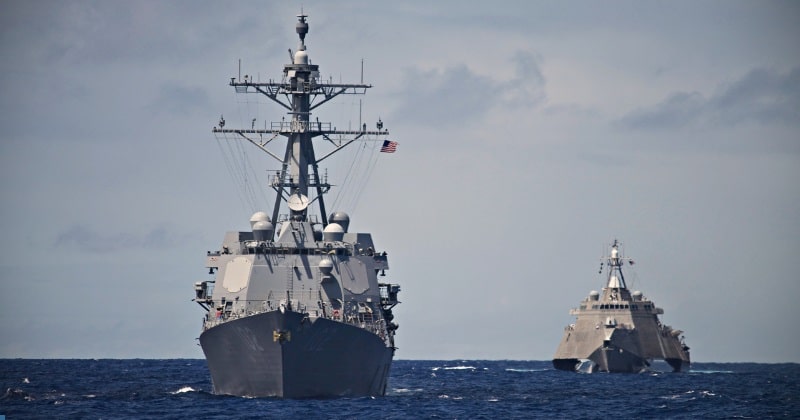
Blue Water Navy veterans are Navy and Coast Guard veterans who served on open-sea vessels off Vietnam. The Blue Water Navy Vietnam Veterans Act of 2019 extended the offshore location rule to vessels operating not more than 12 nautical miles seaward from the statutory demarcation line of the waters of Vietnam and Cambodia during the qualifying period.
38 U.S.C. § 1116A defines the offshore boundary using named latitude-and-longitude points and contains a special prior claim rule for certain veterans and survivors whose covered claims were filed on or after September 25, 1985 and before January 1, 2020, then denied for lack of service connection. When the same condition is refiled on or after January 1, 2020 and granted under § 1116A, the earlier claim date may control for effective date purposes.
Which Vietnamese Bays and Harbors Qualify?
- Major ports and well-known harbors: Da Nang Harbor, Cam Ranh Bay, Nha Trang Harbor, and Vung Tau Harbor.
- Central coast bays: Qui Nhon Bay, Van Phong Bay, Vung Ro Bay, Vung Lam Bay, Vung La Bay, and Xuan Dai Bay.
- Southern and coastal bays: Ganh Rai Bay, Rach Gia Bay, Dam Bay, Tre Bay, and Nha Phu Bay.
A veteran aboard a ship during the time it had duty or visitation in one of those locations would have qualifying offshore service for Blue Water Navy purposes. Hill & Ponton has litigated claims involving locations such as Da Nang Bay and maintains case materials and maps for veterans and advocates reviewing that history.
How Can Vietnam Veterans Prove Where and When They Served?
VA typically uses service department records to establish a veteran’s location and dates in Vietnam. When the ordinary separation record does not identify the necessary location, the claim record can be developed with personnel, unit, ship, flight, and other official records.
A DD-214 or other separation record establishes the time and location of service when it identifies Vietnam service. The Official Military Personnel File and unit records document assignments, temporary duty, travel, and unit locations.
If VA cannot place a Blue Water Navy ship inside the 12-nautical-mile zone on the claimed dates, deck logs can supply the vessel coordinates needed to compare the ship’s position with the statutory boundary.
For C-123 service, USAF Form 2096 can identify a unit assignment, USAF Form 5 can document flight duties, and USAF Form 781 can document aircraft maintenance duties.
Winning VA Benefits for Agent Orange Exposure in Vietnam
Once VA verifies qualifying service in the Republic of Vietnam, the claim still needs a current diagnosed disability and a legal path connecting that disability to service. VA’s Agent Orange disability compensation guidance separates exposure from diagnosis. Military records establish qualifying Vietnam service, while medical records establish the disability being claimed.
The Diagnosis Has to Match the Claim
Consider a veteran whose records already establish service in Vietnam but whose claim says only “Agent Orange.” VA still needs a diagnosed disability to rate. The useful evidence in that case is the medical record identifying the disease, not another statement describing herbicide exposure.
A veteran can have conceded Agent Orange exposure and still lose the claim if the medical record does not establish the disability being claimed. The diagnosis should be clear in VA or private treatment records, pathology reports, specialist records, or other competent medical evidence.
The distinction is especially important when similar medical terms carry different VA consequences. The claim should identify the diagnosed disease rather than describe the disability only as “Agent Orange.” Agent Orange is the exposure, not the diagnosis.
A Non-Presumptive Diagnosis Can Still Be Service Connected
For a non-presumptive condition, VA requires additional evidence showing that the disability began during or worsened because of service, or scientific or medical evidence connecting the condition to Agent Orange. A medical opinion is stronger when it addresses the veteran’s individual history, exposure, risk factors, and relevant research rather than relying on a general statement about herbicides.
The Rating Is a Separate Fight from Service Connection
Winning service connection does not determine the percentage VA assigns. VA rates the service-connected disability according to its severity, and the monthly payment follows the combined disability rating and dependent status. The record should document the symptoms, treatment, functional limitations, and complications that control the rating for the specific disability.
A veteran can win a rating but still be undercompensated. If VA overlooks disabling residuals, complications, or secondary conditions, the dispute concerns the rating and the full scope of the service-connected disability rather than Agent Orange exposure.
Secondary Disabilities Can Increase the Overall Benefits
An Agent Orange-related disability can cause or aggravate another disability. When the medical evidence supports that relationship, the secondary condition can be claimed separately and can affect the veteran’s combined rating. A compensation review should therefore look beyond the first diagnosis VA granted. Complications, residuals after treatment, and disabilities caused or aggravated by an established service-connected condition can require separate consideration.
Were You Denied VA Disability Benefits?
A Vietnam veteran can establish presumed Agent Orange exposure and still receive a denial. The decision may dispute the veteran’s service location, the diagnosis, the medical connection for a non-presumptive disease, the disability rating, or another required element.
A denial based on unverified Vietnam service can often be tested against documentary records that show the veteran’s actual location. Blue Water Navy cases require a date-specific comparison between the veteran’s period aboard ship and the vessel’s recorded position. Hill & Ponton has handled Vietnam waterway and offshore exposure disputes and can identify whether the existing record supports the claimed location or whether additional service records are needed.
If Vietnam service is already established and the claimed disease is presumptive, another nexus opinion should not be used to solve a problem that the presumption already resolves. On the other hand, a diagnosis outside the presumptive list will need a medical nexus. If the remaining dispute concerns the percentage or the effective date, those issues require different evidence and must be challenged on their own terms.
Get Help with Your Vietnam Claim
My name is Matthew Hill, and I focus on helping Vietnam War veterans get their denied claims approved. While I work with vets from all across the spectrum, I am heavily involved with those who have been exposed to Agent Orange, whether at sea, the Blue Water veterans, or those deployed in Thailand, Korea, Philippines, etc.
If you have questions or if you’ve filed a claim and been denied, please fill out the form below and let my firm investigate for you. I can’t make any promises about how we’ll be able to get you compensated. I can tell you that we’ve helped over 30,000 vets get disability compensation over the years, so we know a lot about what it would take to get your claim approved.
Get a Free Evaluation for Your Appeal
“*” indicates required fields
Written by