
The Veterans Administration considers all types of leukemia for disability benefits, and assigns ratings from 0% to 100% based on the status of the disease and the severity of any residuals.
The most common type of leukemia in veterans is CLL/SLL: chronic lymphocytic leukemia and small lymphocytic lymphoma, both chronic B-cell cancers which are considered indistinguishable. The VA reports that over 13,000 veterans have been diagnosed with CLL/SLL.
CLL and many other types of leukemia are linked to exposures such as Agent Orange, radiation, burn pits, or contaminated water at Camp Lejeune. This can make it easier for veterans to establish service connection and claim compensation.
How the VA Rates Leukemia
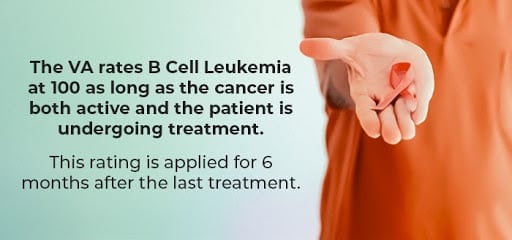
Most leukemias (except chronic myelogenous leukemia) are rated under Diagnostic Code 7703. This includes Chronic Lymphocytic Leukemia (CLL), Acute Lymphoblastic Leukemia (ALL), Acute Myeloid Leukemia (AML), Hairy Cell, Prolymphocytic Leukemia, and more. The VA assigns a 100% rating for leukemia during active treatment.
The 100% rating continues for six months following the end of treatment, then a new rating is assigned based on a review of residual symptoms, side effects of treatment, daily activity limitations, and reduced work ability.
VA Ratings for CLL, ALL, AML and Other Leukemias (DC 7703)
| Rating | Rating Criteria |
|---|---|
| 100% rating | When there is active disease or during a treatment phase |
| 0% rating | Chronic lymphocytic leukemia or monoclonal B-cell lymphocytosis (MBL), asymptomatic, Rai Stage 0 |
| 0-100% | Residuals rated under the appropriate diagnostic codes |
When Is Chronic Lymphocytic Leukemia Rated 0%?
Rai Stage 0 in CLL is rated by the VA as 0% (noncompensable) because at this stage, the main finding is an increased lymphocyte count without swollen lymph nodes, enlarged organs, or severe anemia.
Stage 0 is generally considered low risk and is often monitored rather than treated right away. When the disease becomes active and produces symptoms in later stages, CLL is assigned a 100% disability rating.
Are Myelodysplastic Syndromes and Myeloproliferative Neoplasms Considered Leukemias?
Myelodysplastic syndromes and myeloproliferative neoplasms are rated separately under their own diagnostic codes, but they often develop into Acute Myeloid Leukemia (AML).
VA Ratings for Chronic Myelogenous Leukemia
The VA rates chronic myelogenous leukemia at 30%, 60%, or 100% under DC code 7718 in the Schedule of Ratings for Hemic and Lymphatic Systems:
| Rating | Rating Criteria |
|---|---|
| 100% rating | Requiring peripheral blood or bone marrow stem cell transplant, or continuous myelosuppressive or immunosuppressive therapy treatment |
| 60% rating | Requiring intermittent myelosuppressive therapy, or molecularly targeted therapy with tyrosine kinase inhibitors, or interferon treatment when not in apparent remission |
| 30% rating | In apparent remission on continuous molecularly targeted therapy with tyrosine kinase inhibitors |
How Can You Get VA Disability for Leukemia?
The VA recognizes leukemia as a compensable condition when it was caused or worsened by military service, and veterans must meet specific requirements. Up-to-date civilian and or military medical records should include as much of the following information as possible:
- A recent leukemia diagnosis performed by a qualified healthcare provider
- Evidence of active leukemia vs. remission (for a 100% rating)
- Laboratory or pathology findings, including biopsy results to show leukemia subtype and stage
- Imaging studies (e.g., PET or CT scans) showing the spread or extent of disease
- Documentation of the type and frequency of leukemia treatment (e.g., chemotherapy, radiotherapy using radioactive phosphorus, stem cell, or bone marrow transplants)
- Medical documentation describing active leukemia symptoms
- Documentation of residual effects (e.g., fatigue, weakened immune function, neuropathy)
- Service records verifying exposure to a qualifying herbicide or other toxin related to VA’s presumptive provisions
- A medical opinion explaining how leukemia was caused or worsened by military service, if the condition is not considered presumptive
Establishing Service Connection
The most direct way to connect leukemia to military service is the presumptive path. A presumptive service connection involves a disability that the VA has formally linked to specific periods of service in certain geographic locations or under certain circumstances where toxic exposure was known to occur.
For instance, Hairy Cell Leukemia (HCL) is a type of chronic B-cell leukemia linked to toxic exposures such as Agent Orange and herbicides.
The VA presumes that leukemia is related to military duty if the veteran meets the required service criteria, without the need to prove a direct link between military service and the medical condition.
Veterans whose service does not fall under a presumptive category must provide a nexus (typically a medical opinion written by a qualifying licensed provider) directly linking leukemia to their military service and collect supporting evidence. The VA will also consider non-presumptive leukemias under TERA procedures.
Another possibility is providing evidence of a secondary relationship to another service-connected condition, such as when leukemia develops as a result of, or was worsened by, treatment for another service-connected cancer (e.g., Hodgkin’s lymphoma or other conditions).
The Road to VA Compensation, a free book for veterans, explains how to make a claim, establish service connection, and prove the case.
Get your free book hereIs Your Leukemia a Presumptive Condition?
A presumptive service-connected condition is one that the VA has officially linked to a veteran’s military service during specific time periods in certain geographic locations or under certain circumstances where toxic exposure occurred.
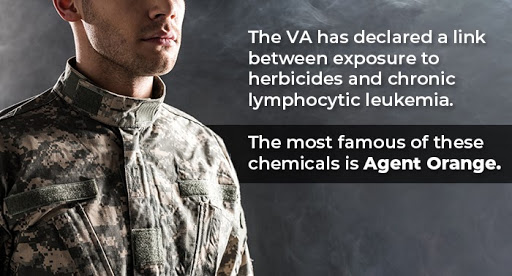
The VA recognizes several types of leukemia as presumptive conditions because of documented exposure risks such as Agent Orange, burn pit toxins, radiation, and unsafe water supplies at Camp Lejeune.
This means that veterans with qualifying service in certain locations like Vietnam, the Gulf War region, Iraq, Afghanistan, or Camp Lejeune, NC may be eligible for disability benefits without the need to establish a direct causal connection.
In 2025 the VA expanded presumptive coverage for Gulf War and Post-9/11 deployed veterans to include additional blood-related cancers, including acute and chronic leukemias.
Agent Orange Presumptive Leukemia
- Chronic lymphocytic leukemia (CLL)
- Hairy cell leukemia
- Acute lymphoblastic leukemia, mature B-cell type
- B-Cell prolymphocytic leukemia
- Precursor B lymphoblastic leukemia
Qualifying Locations and Time Periods
- Vietnam between January 9, 1962, and May 7, 1975, including inland waterways, or aboard a ship operating not more than 12 nautical miles from the coast of Vietnam
- Thailand at any U.S. or Royal Thai base from January 9, 1962, through June 30, 1976
- Laos from December 1, 1965, to September 30, 1969
- Cambodia in Kampong Cham Province, Mimot, or Krek areas between April 16 and April 30, 1969
- Guam or American Samoa service on land or surrounding waters from January 9, 1962, to July 31, 1980
- Johnston Atoll assignments between January 1, 1972, and September 30, 1977
- Korean DMZ from September 1, 1967 through August 31, 1971
- Regular contact involving C-123 aircraft operation or maintenance, between 1969 and 1986
Burn Pits and Airborne Hazards
Since January 2025, all leukemia types, both acute and chronic, are burn pit–related conditions. Veterans diagnosed with leukemia and who have documented service in a covered location during the qualifying time period may file for presumptive service connection.
The VA presumes the disease is linked to toxic particulate exposure during qualifying service in the following areas (including the airspace above):
- Service on or after August 2, 1990: Iraq, Kuwait, Saudi Arabia, Bahrain, Oman, Qatar, Somalia, United Arab Emirates, the neutral zone between Iraq and Saudi Arabia, Gulf of Aden, Gulf of Oman, Persian Gulf, Arabian Sea, Red Sea
- Service on or after September 11, 2001: Afghanistan, Djibouti, Egypt, Jordan, Lebanon, Syria, Uzbekistan, Yemen
Radiation Exposure Presumption
Studies have found that ionizing radiations can be a cause of almost all types of leukemias, particularly acute and chronic myeloid leukemias (AML and CML) and acute lymphoblastic leukemia (ALL).
The VA recognizes this and grants presumptive service connection for most leukemias, excluding chronic lymphocytic leukemia (CLL). The radiation exposure presumption applies to veterans involved in specific radiation-risk activities:
- Onsite participation in specified atmospheric nuclear weapons tests between 1945 and 1962 (in Nevada and the Pacific Ocean)
- Underground nuclear weapons testing at Nevada Test Site for at least 250 days from Jan. 1, 1963, through Dec. 31, 1992
- Underground nuclear weapons testing at Amchitka Island, Alaska before Jan. 1, 1974
- Palomares, Spain cleanup mission from January 17, 1966 to March 31, 1967
- Thule, Greenland cleanup mission from January 21, 1968 to September 25, 1968
- McMurdo Station in Antarctica from 1964 to 1973
- Enewetak Atoll nuclear testing site remediation and cleanup operations from January 1, 1977, through December 31, 1980
- Service at one of these gaseous diffusion plants for at least 250 days before Feb. 1, 1992: Paducah, Kentucky; Portsmouth, Ohio; or K25 in Oak Ridge, Tennessee
- Service in a capacity that would qualify the veteran for inclusion as a member of the Special Exposure Cohort
Non-presumptive exposure, such as military occupational exposure or radiation treatments, is decided on a case-by-case basis. Affected veterans must prove radiation exposure and make a compelling case for the VA.
Camp Lejeune Presumption
Veterans stationed at Camp Lejeune, North Carolina for at least 30 days between August 1, 1953 and December 31, 1987 qualify for presumptive service connection for leukemia from water contamination. Service at Camp Lejeune includes service at Marine Corps Air Station (MCAS) New River.
Veterans who do not meet the criteria may still qualify for VA disability benefits by establishing direct service connection, supported by medical evidence showing the leukemia was caused or worsened by military service or toxic exposure.
Proving Leukemia from Toxic Exposure Risk Activity (TERA)
A Toxic Exposure Risk Activity is an activity during military duty that potentially exposes a service member to harmful substances. Under the PACT Act, this type of exposure may support a disability claim for certain illnesses on a non-presumptive basis, including leukemia, if there is evidence of an association between the specific toxic exposure and the leukemia.
Toxins known to be associated with leukemia include TCE, perchloroethylene (PCE), benzene and other aromatic hydrocarbons (such as those in jet fuel), pesticides and toluene/xylene-containing solvent mixes.
What Does It Take to Win a TERA Claim?
- Military service records showing qualifying service or exposure
- Evidence of direct exposure to toxic chemicals
- Submitting a disability claim under PACT Act provisions to help streamline the review process
- A medical opinion from a licensed healthcare provider (i.e., a nexus letter) explaining how the condition relates to military service (for non-presumptive conditions, such as when a member’s service didn’t meet the geographic or timeline requirements)
Case Example: Winning Service Connection for Chronic Myelomonocytic Leukemia
In this real-life case on appeal from the Department of Veterans Affairs Regional Office in San Diego, California, Hill & Ponton successfully represented a veteran who served on active duty from May 2000 to May 2004, including service in Kuwait and Iraq.
The veteran claimed that he developed chronic myelomonocytic leukemia (CMML) due to toxic exposure from oil and trash fires and depleted uranium rounds. His records included bloodwork showing evidence of leukemia since as early as 2006.
The most important evidence in the case was a 2016 medical opinion from a registered nurse citing various medical reports and supporting the veteran’s claim that the burning of solid and liquid wastes generated harmful chemicals that posed a significant health risk.
One of them was benzene, which is known to cause leukemia, can accumulate in fat cells, and remain in the body for years.
The medical opinion noted that the veteran did not have the typical risk factors for this rare leukemia (such as older age or prior chemotherapy) and lacked a genetic predisposition, making the in-service toxic exposure the most likely cause.
This allowed Hill & Ponton to successfully argue that the toxic fume exposure during the veteran’s overseas duty was at least as likely as not linked to the development of his leukemia. The Board of Veterans accepted the rationale and granted service connection for chronic myelomonocytic leukemia.
Should You Have a Higher VA Rating?
You may qualify for a higher rating for leukemia under various circumstances, such as:
- Leukemia progresses to a worsened state
- Complications of leukemia (e.g., anemia, infections, autoimmune disorders, or depression) occur
- Secondary conditions develop, such as those caused by leukemia treatment
- Leukemia causes debilitation
- Debilitation is severe enough to require aid and attendance
Common Secondary Conditions to Leukemia
Certain health conditions caused or worsened by leukemia or its treatment (chemotherapy or radiation treatment) may be rated separately as secondary disabilities. Common conditions secondary to leukemia or leukemia treatment that often warrant a higher rating include:
- Chronic anemia (DC 7700) – crowding of red blood cells in the bone marrow caused by the increased number of white cells in leukemia or chemotherapy. Rated at 0% to 100% based on hemoglobin levels.
- Chronic fatigue (DC 6354) – the VA often rates long-term fatigue linked with cancer under the criteria for Chronic Fatigue Syndrome (CFS). The ratings range from 10% to 100% depending on daily activity restrictions.
- Chronic infections/immune dysfunction (DC 7702) – involves an immune dysfunction from agranulocytosis (i.e., low white blood cell count) caused by ineffective white blood cells and a weakened immune system, causing recurring infections; agranulocytosis is rated at 10% to 100%.
- Peripheral neuropathy (DC 8520 for lower extremities or DC 8513 for upper extremities) – damage to nerves, commonly in the feet and hands, caused by radiation treatment or chemotherapy. Ratings range from 10% to 60% or higher, depending on the severity of symptoms.
- Depression (DC 9434) – linked to leukemia due to chronic pain and stress, or from side effects of treatment.
Additional Compensation – Do You Qualify?
When veterans are unable to maintain employment due to leukemia and its complications, they may qualify for Total Disability Individual Unemployability and receive 100% disability compensation even if their VA rating is below 100%.
The VA also offers a benefit called Special Monthly Compensation (SMC) that provides additional compensation (beyond the 100% rating) in certain circumstances linked with leukemia. For example, veterans could be eligible for SMC if they are housebound or require regular skilled nursing care or ongoing aid and attendance.
Can the Veteran’s Spouse Get Benefits?
When the veteran is living with a 100% P&T disability, spouse benefits may include significant caregiving support through the Program of Comprehensive Assistance for Family Caregivers (PCAFC), which includes a monthly stipend, training, and health coverage when a service-connected leukemia requires daily in-person care.
Other benefits for P&T disabled veteran spouses include:
- CHAMPVA (comprehensive healthcare coverage)
- Spousal Aid and Attendance (A&A), a VA pension increase for veterans whose qualifying spouse requires regular help with daily activities such as bathing, dressing, or eating
- Chapter 35 DEA education assistance (monthly payments to help cover housing, tuition, books and supplies expenses)
- State-specific tuition waivers or assistance programs
If the veteran dies as a result of service-connected leukemia, the spouse is eligible for survivor benefits including:
- TRICARE healthcare insurance
- Dependency and Indemnity Compensation (DIC)
- Survivor Pension
- Accrued benefits that would have been received by the veteran
Hill & Ponton’s VA-accredited attorneys assist veterans and surviving spouses in winning the compensation they are entitled to, with no upfront costs. If you were denied VA disability, DIC or accrued benefits, our team can evaluate your claim for free. Contact us today to see how we can help.
Did VA Deny Your Disability Claim?
Let our team review your case today!
START your free evaluation todayWritten by