
Columbus Air Force Base
Columbus Air Force Base, MS
 Known Toxins
1
 Years of Operation
1941-Present
Base Background
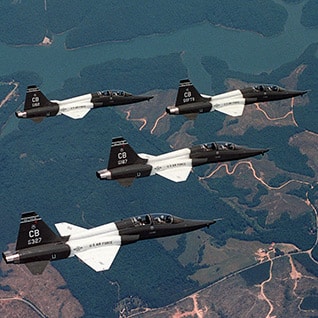
Columbus Air Force Base was established in 1941 as an Army Air Corps pilot training school in Lowndes County, Mississippi, with flight training beginning in 1942. The base closed in 1945 and reopened in 1951 as a contract flying school for the pilot buildup during the Korean War. It joined the Strategic Air Command in 1955, then rejoined Air Training Command in 1969 and resumed its original pilot-training mission. Today it is home to the 14th Flying Training Wing, which conducts undergraduate pilot training in the T-6 Texan II, T-38C Talon, and T-1A Jayhawk.
Toxic Exposure at Columbus AFB
Columbus AFB is one of hundreds of Air Force installations nationwide flagged for per- and polyfluoroalkyl substances (PFAS) contamination, tied to decades of aqueous film-forming foam (AFFF) use in firefighting on base. Its preliminary assessment and site inspection has concluded, and the base has since moved into a full remedial investigation. That investigation is expected to continue until 2038, pushed back from earlier projections so additional testing and fieldwork can characterize the full extent of PFAS impacts before a remedy is chosen.
Illnesses caused by PFAS often take years or even decades to surface, so anyone based at, employed by, or otherwise present at Columbus AFB while AFFF was in routine use may not connect a later diagnosis back to that exposure. If you developed a medical condition that could be related to toxic exposure at Columbus Air Force Base, our VA disability lawyers may be able to help you obtain compensation. Get a free case evaluation to explore your legal options.
Known Toxins
The following chart outlines the medical conditions associated with toxic exposure at this base, classified by the strength of evidence required (strong, good or limited).* Please keep in mind that it is not a complete list.
| Toxin | Potential Effects & Strength of Evidence Needed | |||
|---|---|---|---|---|
| Strong | Good | Limited | ||
| PFAS (Firefighting Foam) | Potential Effects & Strength of Evidence Needed | - | - | Testicular cancer Renal (kidney) cancer... Prostate cancer |
*Effects are according to the Center for Disease Control and Prevention’s Agency for Toxic Substances & Disease Registry unless otherwise noted.
Paths to Compensation
Veterans who developed health conditions associated with the PFAS contamination at Columbus Air Force Base could be eligible for compensation and other veteran benefits. A disability claim requires:
- Documenting the time spent at the base using service records and other documentation
- Gathering comprehensive medical evidence
- Obtaining expert medical opinions to establish a link between the diagnosed medical conditions and the toxic exposure
Our VA-accredited lawyers know what it takes to win a toxic exposure claim. Contact us for a free evaluation: we specialize in disability law and work on a contingency basis, with no upfront fees.