
Hanscom Air Force Base
Hanscom Air Force Base, MA
 Known Toxins
28
 Years of Operation
1941-Present
Base Background
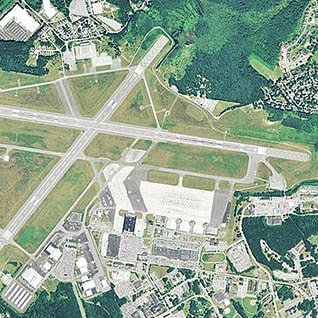
The Massachusetts Legislature authorized the purchase of farmland spanning Bedford, Lincoln, Concord, and Lexington, Massachusetts, in May 1941 for a Boston-area auxiliary airport, and the Commonwealth leased the field to the War Department for Army Air Forces use in mid-1942. Fighter squadrons trained there through 1943, and the field was renamed Laurence G. Hanscom Field in February 1943. After World War II the base became a center for Air Force electronic-systems development, formalized with the Electronic Systems Division’s establishment in 1961. Regular military flying operations ended in September 1973, and the Air Force gave up its lease on the airfield itself in 1974, though it retained the surrounding acreage, renamed Hanscom Air Force Base in 1977. Today the base is home to the 66th Air Base Group and the program offices of the Air Force Life Cycle Management Center (headquartered at Wright-Patterson Air Force Base, Ohio).
Toxic Exposure at Hanscom Air Force Base
The Environmental Protection Agency placed Hanscom on its National Priorities List in 1994, covering roughly 1,120 acres across the four towns the base spans. Decades of solvent use, waste disposal, and firefighting-foam use left documented contamination in groundwater, soil, sediment, and surface water, and cleanup and monitoring continue at multiple locations today.
Volatile Organic Compounds (VOCs) like TCE, PCE, vinyl chloride, 1,1,1-trichloroethane, benzene, toluene, and ethylbenzene, are documented in base groundwater, with related compounds also found in soil and surface water. Arsenic, lead and heavy metals were also documented at various points on base.
Aroclor 1248, a specific PCB formulation, was documented in sediment on base, as were Polycyclic Aromatic Hydrocarbons (PAHs) like benzo(a)pyrene, benzo(a)anthracene, dibenzo(a,h)anthracene, and related compounds.
PFAS Contamination
The Air Force identified per- and polyfluoroalkyl substances (PFAS) with a chemical fingerprint indicative of legacy PFOS-based aqueous film-forming foam (AFFF) in groundwater near the headwaters of the Shawsheen River on base, and suspended an existing groundwater remediation system after PFAS turned up in the water it discharged to the river. In December 2022, the Air Force and EPA proposed new investigation areas covering a Taxiway Echo release, Fire Training Area II, and a motor pool release site specifically to address AFFF-related PFAS. That investigation is ongoing, and per the Department of Defense’s most current figures, released in June 2026, the projected completion date is now 2038.
Anyone who worked at, trained at, or lived near Hanscom while these chemicals were in use could have been exposed without realizing it, since illnesses tied to toxic exposure often don’t appear for years or even decades. If you developed a medical condition related to toxic exposure after living or working at or near Hanscom Air Force Base, our VA disability lawyers may be able to help you obtain compensation. Get a free case evaluation to explore your legal options.
Known Toxins
The following chart outlines the medical conditions associated with toxic exposure at this base, classified by the strength of evidence required (strong, good or limited).* Please keep in mind that it is not a complete list.
| Toxin | Potential Effects & Strength of Evidence Needed | |||
|---|---|---|---|---|
| Strong | Good | Limited | ||
| Acetone | Potential Effects & Strength of Evidence Needed | - | Arrhythmias |
- |
| Arsenic | Potential Effects & Strength of Evidence Needed | Peripheral neuropathy Hyperkeratosis/Hyperpigmentation... Diabetes Type II Coronary artery disease, peripheral vascular disease, atherosclerosis |
Steatosis (fatty liver) Skeletal malformations... Renal (kidney) cancer Raynaud's phenomenon Pneumonitis hypersensitivity Neural tube defects/CNS malformations Nasal septal perforation Myocardial ischemia Low birth weight/Small for Gestational Age Hypertension Hepatoportal Sclerosis Fetotoxicity (Miscarriage/spontaneous abortion; stillbirth) Congenital malformations general Cirrhosis Cardiomyopathy Bladder cancer Arrhythmias Anemia hemolytic Alopecia Adult-Onset Leukemias |
Neurosthenia (Organic affective syndrome) Myelodysplastic syndrome... Metal fume fever Immune suppression Hepatocellular cancer (Liver cancer) Genitourinary malformations (includes cryptorchidism, hypospadias) Cognitive impairment (includes impaired learning, impaired memory, and decreased attention span) Acute tubular necrosis |
| Barium | Potential Effects & Strength of Evidence Needed | - | - | Sarcoidosis Arrhythmias |
| Benzene | Potential Effects & Strength of Evidence Needed | Myelodysplastic syndrome Multiple myeloma... Aplastic anemia |
Scleroderma Renal (kidney) cancer... Preterm delivery Menstrual disorders Lymphoma non Hodgkin's Autoimmune antibodies, positive ANA Arrhythmias |
Peripheral neuropathy Neural tube defects/CNS malformations... Nasopharyngeal/SinoNasal cancer Lung cancer Immune suppression Hepatocellular cancer (Liver cancer) Cardiac congenital malformations Breast cancer Brain cancer adult Asthma irritant |
| Benzo A Pyrene | Potential Effects & Strength of Evidence Needed | Lung cancer |
Skin cancer (nonmelanoma) Lung cancer... Immune suppression Bladder cancer |
Reduced Fertility Male (infertility and subfertility) |
| Cadmium | Potential Effects & Strength of Evidence Needed | Renal stones Osteoporosis... Itaiitai disease Chronic renal disease Acute tubular necrosis |
Reduced Fertility Male (infertility and subfertility) Prostate cancer... Pneumonia Nephrotic syndrome COPD chronic obstructive pulmonary disease Cardiomyopathy Anemia hemolytic |
Testicular cancer Soft tissue sarcoma... Renal (kidney) cancer Pulmonary fibrosis Pulmonary edema Peripheral neuropathy Pancreatic cancer Oral clefts (cleft lip and palate) Neural tube defects/CNS malformations Metal fume fever Menstrual disorders Immune suppression Hypoactivity Hypertension Genitourinary malformations (includes cryptorchidism, hypospadias) Decreased I.Q../Mental retardation Congenital malformation Cranio Facial Cognitive impairment (includes impaired learning, impaired memory, and decreased attention span) Brain cancer adult Autoimmune antibodies, positive ANA Arrhythmias ADD/ADHD, hyperactivity Abnormal sperm (morphology, motility, and sperm count) |
| Chlordane | Potential Effects & Strength of Evidence Needed | - | Porphyria toxic Peripheral neuropathy |
Soft tissue sarcoma Multiple Sclerosis... Lymphoma non Hodgkin's Lung cancer Hormonal changes (levels of circulating sex hormones FSH/LH, Inhibin, and/or estrogens, progesterones, and androgens) Hepatocellular cancer (Liver cancer) Childhood Leukemias Breast cancer Aplastic anemia Adult-Onset Leukemias |
| Chlorinated Solvents | Potential Effects & Strength of Evidence Needed | - | Childhood Leukemias Adult-Onset Leukemias |
- |
| Chlorobenzene | Potential Effects & Strength of Evidence Needed | - | - | - |
| Chloroethene | Potential Effects & Strength of Evidence Needed | - | - | - |
| Chrysene | Potential Effects & Strength of Evidence Needed | - | - | - |
| Copper | Potential Effects & Strength of Evidence Needed | - | Nasal septal perforation Metal fume fever... Lung cancer Granulomatous disease (liver) Decreased vision (includes blindness, retinopathy, optic neuropathy) Chronic renal disease Angiosarcoma (hepatic) Anemia hemolytic |
Sarcoidosis Pulmonary fibrosis... Neural tube defects/CNS malformations Myelodysplastic syndrome Immune suppression Autoimmune antibodies, positive ANA Acute tubular necrosis |
| Dibenzo (A,H) anthracene | Potential Effects & Strength of Evidence Needed | - | - | - |
| Heptachlor epoxide | Potential Effects & Strength of Evidence Needed | - | - | - |
| Indeno pyrene | Potential Effects & Strength of Evidence Needed | - | - | - |
| Iron | Potential Effects & Strength of Evidence Needed | Bronchitis chronic |
- | Soft tissue sarcoma Diabetes Type II... Brain cancer adult Alzheimer's |
| Jet Fuel | Potential Effects & Strength of Evidence Needed | - | - | - |
| Lead | Potential Effects & Strength of Evidence Needed | Seizures Reduced Fertility Male (infertility and subfertility)... Peripheral neuropathy Hypertension Gout Developmental Delay Decreased I.Q../Mental retardation Decreased Coordination/ Dysequilibrium Coronary artery disease, peripheral vascular disease, atherosclerosis Cognitive impairment (includes impaired learning, impaired memory, and decreased attention span) Chronic renal disease Behavioral problems Anemia hemolytic ADD/ADHD, hyperactivity Abnormal sperm (morphology, motility, and sperm count) |
Reduced Fertility Female (infertility and subfertility) Psychiatric disturbances... Preterm delivery Porphyria toxic Pancreatic cancer Nephrotic syndrome Low birth weight/Small for Gestational Age Immune suppression Hearing loss Glomerulonephritis Fetotoxicity (Miscarriage/spontaneous abortion; stillbirth) Delayed growth Cardiomyopathy Arrhythmias Altered time to sexual maturation (accelerated or delayed puberty) |
Wilm's Tumor Uterine cancer... Thyroid disorders Hypothyroidism Stomach cancer Reduced Fertility Male (infertility and subfertility) Osteoporosis Neurosthenia (Organic affective syndrome) Lung cancer Hepatocellular cancer (Liver cancer) Erectile dysfunction Diabetes Type II Congenital malformation Cranio Facial Colorectal cancer Carcinoid Breast cancer Brain cancer adult Bladder cancer Alzheimer's Altered time to sexual maturation (accelerated or delayed puberty) ALS (Lou Gehrig's disease) Abnormal sperm (morphology, motility, and sperm count) |
| Manganese | Potential Effects & Strength of Evidence Needed | Parkinson's disease/Movement disorders Cholestasis |
Psychiatric disturbances Pneumonitis hypersensitivity... Pneumonia Peripheral neuropathy Decreased Coordination/ Dysequilibrium Bronchitis acute ADD/ADHD, hyperactivity |
Skeletal malformations Reduced Fertility Male (infertility and subfertility)... Peripheral neuropathy Neurosthenia (Organic affective syndrome) Neural tube defects/CNS malformations Metal fume fever Fetotoxicity (Miscarriage/spontaneous abortion; stillbirth) Erectile dysfunction Delayed growth COPD chronic obstructive pulmonary disease Cognitive impairment (includes impaired learning, impaired memory, and decreased attention span) Arrhythmias |
| Mercury | Potential Effects & Strength of Evidence Needed | Peripheral neuropathy Hearing loss... Behavioral problems Acute tubular necrosis |
Low birth weight/Small for Gestational Age Immune suppression... Hormonal changes (levels of circulating sex hormones FSH/LH, Inhibin, and/or estrogens, progesterones, and androgens) Glomerulonephritis Fetotoxicity (Miscarriage/spontaneous abortion; stillbirth) Congenital malformations general Chronic renal disease Autoimmune antibodies, positive ANA Aplastic anemia Anemia hemolytic |
Thyroid disorders Hypothyroidism Scleroderma... Reduced Fertility Female (infertility and subfertility) Reduced Fertility Male (infertility and subfertility) Neurosthenia (Organic affective syndrome) Nephrotic syndrome Myocardial ischemia Menstrual disorders Coronary artery disease, peripheral vascular disease, atherosclerosis |
| Naphthalene | Potential Effects & Strength of Evidence Needed | Methemoglobinemia |
Cataracts Anemia hemolytic |
- |
| Nickel | Potential Effects & Strength of Evidence Needed | Asthma allergic |
Stomach cancer Pulmonary fibrosis... Pulmonary edema Nasal septal perforation Laryngeal cancer Immune suppression |
Soft tissue sarcoma Renal (kidney) cancer... Prostate cancer Myocardial ischemia Myelodysplastic syndrome Metal fume fever Mesothelioma Fetotoxicity (Miscarriage/spontaneous abortion; stillbirth) Arrhythmias |
| Petroleum | Potential Effects & Strength of Evidence Needed | - | - | Multiple myeloma Laryngeal cancer |
| PFAS (Firefighting Foam) | Potential Effects & Strength of Evidence Needed | - | - | Testicular cancer Renal (kidney) cancer... Prostate cancer |
| Silver | Potential Effects & Strength of Evidence Needed | - | - | Chronic renal disease |
| Toluene (BTEX compounds) | Potential Effects & Strength of Evidence Needed | Fetal solvent syndrome/ Fetal Ethanol Syndrome Congenital malformation Cranio Facial |
Steatosis (fatty liver) Scleroderma... Reduced Fertility Female (infertility and subfertility) Menstrual disorders Low birth weight/Small for Gestational Age Fetotoxicity (Miscarriage/spontaneous abortion; stillbirth) Developmental Delay Delayed growth Cognitive impairment (includes impaired learning, impaired memory, and decreased attention span) Autoimmune antibodies, positive ANA Arrhythmias Acute tubular necrosis Acute hepatocellular injury (Hepatitis) |
Stomach cancer Peripheral neuropathy... Neurosthenia (Organic affective syndrome) Neural tube defects/CNS malformations Multiple myeloma Immune suppression Genitourinary malformations (includes cryptorchidism, hypospadias) Decreased Coordination/ Dysequilibrium Colorectal cancer Color vision disturbance Cirrhosis Brain cancer adult Asthma irritant Acute hepatocellular injury (Hepatitis) Abnormal sperm (morphology, motility, and sperm count) |
| Total Petroleum Hydrocarbons (TPE) | Potential Effects & Strength of Evidence Needed | - | - | - |
| Zinc | Potential Effects & Strength of Evidence Needed | Skin ulceration |
- | Testicular cancer |
*Effects are according to the Center for Disease Control and Prevention’s Agency for Toxic Substances & Disease Registry unless otherwise noted.
Paths to Compensation
Veterans who lived or worked at or near Hanscom Air Force Base may be able to receive compensation and other disabled veterans benefits if they developed health conditions associated with toxic exposure. This would require:
- Documenting the time spent at the base using service records and other documentation
- Gathering comprehensive medical evidence
- Obtaining expert medical opinions to establish a link between the diagnosed medical conditions and the toxic exposure
Our VA-accredited lawyers know what it takes to win a toxic exposure claim. Contact us for a free evaluation: we specialize in disability law and work on a contingency basis, with no upfront fees.