
Key Field Air National Guard Base
Meridian, MS
 Known Toxins
1
 Years of Operation
1935-Present
Base Background
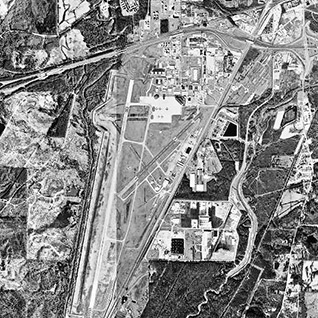
Key Field opened as a civilian airfield in Meridian, Lauderdale County, Mississippi, in November 1930. The Mississippi Air National Guard’s first flying unit was federally recognized at the field in 1939, and Key Field came under U.S. Army Air Corps control during World War II. Today it operates as a joint-use civil-military airfield: the Mississippi Air National Guard’s 186th Air Refueling Wing, organized in 1962 as a tactical reconnaissance group before converting to the KC-135R Stratotanker air refueling mission in 1992, is headquartered there, alongside the Mississippi Army National Guard’s 111th Army Aviation Support Facility, Company B, which flies CH-47 Chinook helicopters.
Toxic Exposure at Key Field AFB
Key Field is among the more than 700 active military and National Guard installations nationwide that the Department of Defense has identified as requiring an assessment for the release of per- and polyfluoroalkyl substances (PFAS), the family of chemicals in aqueous film-forming foam that Air National Guard fire crews used for decades in firefighting training and emergency response. The preliminary assessment and site inspection (PA/SI) was completed in 2022 and a remedial investigation is underway.
Personnel stationed at, employed by, or living near Key Field during the decades AFFF was in routine use could have been exposed to PFAS long before any related illness appears. Conditions linked to this kind of toxic exposure often take years, sometimes decades, to surface. If you were at Key Field AFB and later developed a medical condition related to toxic exposure, our VA disability lawyers may be able to help you obtain compensation. Get a free case evaluation to explore your legal options.
Known Toxins
The following chart outlines the medical conditions associated with toxic exposure at this base, classified by the strength of evidence required (strong, good or limited).* Please keep in mind that it is not a complete list.
| Toxin | Potential Effects & Strength of Evidence Needed | |||
|---|---|---|---|---|
| Strong | Good | Limited | ||
| PFAS (Firefighting Foam) | Potential Effects & Strength of Evidence Needed | - | - | Testicular cancer Renal (kidney) cancer... Prostate cancer |
*Effects are according to the Center for Disease Control and Prevention’s Agency for Toxic Substances & Disease Registry unless otherwise noted.
Veterans who lived or worked at or near Key Field Air National Guard Base may be able to receive compensation if they developed health conditions associated with toxic exposure. This would require:
- Documenting the time spent at the base using service records and other documentation
- Gathering comprehensive medical evidence
- Obtaining expert medical opinions to establish a link between the diagnosed medical conditions and the toxic exposure
Our VA-accredited lawyers know what it takes to win a toxic exposure claim. Contact us for a free evaluation: we specialize in disability law and work on a contingency basis, with no upfront fees.