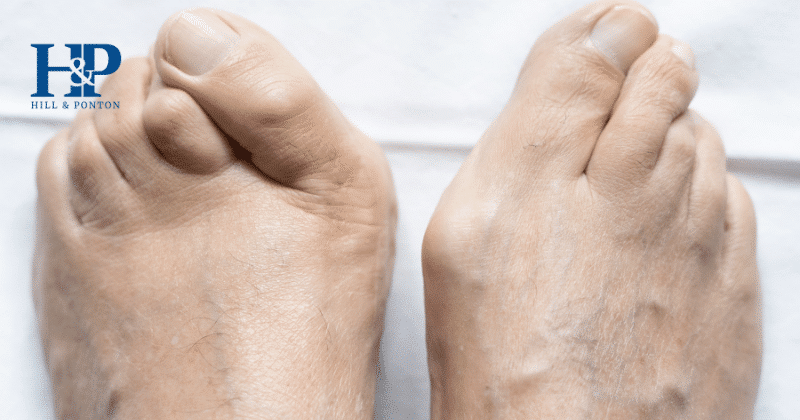

Hallux valgus (bunions) is a foot condition that can significantly affect veterans. This is especially true for those with service-related foot strain or injuries that can become bilateral.
While the VA only rates bunions at 10%, it’s possible to combine them with other conditions that will increase the disability rating.
What is the Hallux Valgus VA Rating?
The VA assigns a 10% rating to hallux valgus for undergoing surgery to resect the metatarsal head (bunion removal surgery). This rating is also assigned when the bunion is severe enough to effectively render the toe unusable, comparable to amputation.
Veterans may also develop hallux rigidus, a form of arthritis causing stiffness in the big toe joint. When severe, this condition receives the same 10% rating as severe hallux valgus.
NOTE: Both hallux valgus and hallux rigidus share the 10% maximum rating, reflecting their similar impact on toe functionality.
Diagnostic code 5280 – Hallux valgus, unilateral:
- 10% Rating: If operated with resection of metatarsal head
- 10% Rating: If the condition is severe enough to be equivalent to amputation of the great toe
Diagnostic Code 5281 – Hallux rigidus, unilateral:
- 10% Rating: If the condition is severe
Unhappy with your VA rating? Contact us for a free review
What Causes Hallux Valgus in Veterans?
Hallux valgus is a deformity where the big toe deviates laterally towards the other toes. This shift is accompanied by enlargement of the first metatarsal joint. Common causes include tight footwear and biomechanical imbalances.
These factors are often exacerbated by military service conditions, such as prolonged use of military boots.
Symptoms and Progression of Hallux Valgus
The progression of hallux valgus typically starts with slight misalignment of the big toe, which gradually worsens. Symptoms include:
- Pain and tenderness around the joint.
- Swelling and redness from overlapping toes.
- Difficulty walking and footwear discomfort.
- Potential secondary issues, such as the development of gout or rheumatoid arthritis, due to altered foot mechanics.
Linking Hallux Valgus to Military Service
To qualify for VA benefits for hallux valgus (or bunions), you must establish service connection. This may involve the following:
- Evidence of Onset or Aggravation: You must prove that your hallux valgus was directly caused or significantly aggravated by military service.
- A Medical Nexus Letter: Submit medical evidence linking the condition to specific service-related activities or gear.
Learn to Prepare (and Win!) Your VA Claim with Our Free Book
The Road to VA Compensation Benefits
Connecting Secondary Conditions to Bunions
Hallux valgus can lead to other compensable secondary conditions. Some of them may include:
- Chronic pain due to altered gait
- Arthritis of the toes
- Gait that leads to knee, hip, and spine problems
VA Unemployability for Hallux Valgus
While Total Disability Individual Unemployability (TDIU) is far less common for Hallux Valgus alone, it is possible in severe cases.
If your hallux valgus drastically limits your employment capabilities (especially in manual labor jobs that require a lot of time on your feet), you may still qualify.
This is particularly effective if you combine your bunion rating with other service-connected disabilities to strengthen your need for TDIU benefits. Learn more about what TDIU can do for you.

Content Reviewed by

Cassandra Crosby is an Accredited Agent and VA Trainer for Hill & Ponton, which she joined in the spring of 2016. She has a Bachelor’s Degree in Legal Studies and over 20 years of experience of management of non-profits programs in Mental Health, Substance Abuse, and Victim Services. A Florida native, she was a military daughter/spouse and has familial ties to the Marines, Air Force, Navy, and Army.
Written by