
This Article covers:
Click a title to scroll down to that section
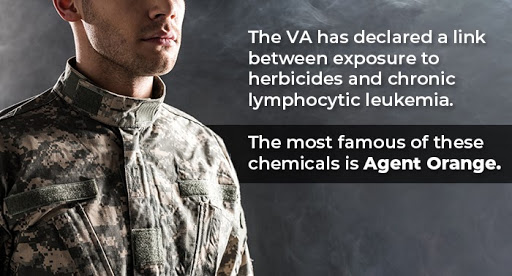
For veterans exposed to Agent Orange, VA presumes service connection when the leukemia is a chronic B-cell type, such as chronic lymphocytic leukemia. That means a veteran with qualifying herbicide exposure does not need to prove that Agent Orange caused the disease. But not every leukemia falls under the presumption.
Acute myeloid leukemia, chronic myeloid leukemia and acute lymphoblastic leukemia are not on VA’s Agent Orange presumptive list. Veterans can still win those claims, but they usually need medical evidence that proves direct causation.
Hill & Ponton reviewed Board of Veterans’ Appeals decisions from 2021 through 2025 and found that veterans and survivors regularly won both presumptive and non-presumptive Agent Orange leukemia claims on appeal. What makes the difference in Agent Orange-related leukemia appeals?
- VA presumes service connection for all chronic B-cell leukemias after qualifying Agent Orange exposure. A generic “leukemia” diagnosis may delay the claim if VA cannot match the disease to the presumptive list.
- Claims denied years ago could get another chance. If VA previously denied CLL or another chronic B-cell leukemia claim, Nehmer rules may allow retroactive benefits back to the earlier claim date.
- AML, CML and ALL are not Agent Orange presumptive leukemias but veterans with those diagnoses may still win through direct service connection.
- Board of Veterans’ Appeals cases involving herbicide-caused leukemia were approved 51.7% of the time according to Hill & Ponton’s review of 2021 to 2025 BVA decisions.
How Can Agent Orange Cause Leukemia?
Agent Orange exposure is linked to leukemia because tactical herbicides contained toxic chemicals, including dioxin, that can affect the immune system, blood-forming tissue and the body’s normal cell-repair process. Leukemia begins in the blood or bone marrow, so medical research has focused closely on whether herbicide exposure increases the risk of cancers involving white blood cells.
For VA benefits, the strongest link is with chronic B-cell leukemias. These are cancers that affect B lymphocytes, a type of white blood cell involved in immune function. Chronic lymphocytic leukemia, or CLL, is the most common example.
VA presumes that Agent Orange caused a veteran’s leukemia when the diagnosis is a chronic B-cell leukemia and the veteran has qualifying herbicide exposure. That presumption means VA should not require the veteran to submit a separate medical nexus opinion proving that Agent Orange caused the disease.
The scientific basis for the presumption comes from National Academies research on veterans and Agent Orange. The National Academies found sufficient evidence of an association between herbicide exposure and chronic lymphocytic leukemia, including hairy cell leukemia and other chronic B-cell leukemias.
More recent research continues to support that connection. A 2025 VA Million Veteran Program study found that Agent Orange-exposed veterans had 61% higher odds of chronic lymphocytic leukemia, with an odds ratio of 1.61.
What Types of Leukemia Are Linked to Agent Orange?
VA’s Agent Orange presumptive list covers all chronic B-cell leukemias. Other leukemia types may still be linked to Agent Orange in an individual case, but VA does not presume that connection automatically. Veterans with acute lymphoblastic leukemia (ALL), AML, CML, or another non-presumptive leukemia usually need a medical opinion that explains why the disease is at least as likely as not connected to herbicide exposure.
Learn How To File And Win Your VA Claim
Get our FREE book The Road to VA Compensation Benefits.
get the free book
Is CLL Presumptive for Agent Orange?
Chronic lymphocytic leukemia (CLL) is the most common Agent Orange leukemia presumptive. If a veteran has CLL and qualifying herbicide exposure, VA should presume service connection. The veteran still needs evidence of the diagnosis and evidence showing qualifying exposure or service in a presumptive herbicide location.
Is Hairy Cell Leukemia Presumptive for Agent Orange?
Hairy cell leukemia is included in the chronic B-cell leukemia presumption. A veteran with hairy cell leukemia does not need to prove a separate medical link between Agent Orange and the diagnosis once qualifying herbicide exposure is established.
Is CML Presumptive for Agent Orange?
No. Chronic myeloid leukemia, also called chronic myelogenous leukemia or CML, is not a chronic B-cell leukemia. The word “chronic” can confuse veterans because VA covers chronic B-cell leukemias. But CML is a myeloid leukemia, not a B-cell leukemia, meaning it falls outside the Agent Orange presumption. A CML claim can still succeed through direct service connection if medical evidence links the disease to herbicide exposure or another toxic exposure.
Is AML Presumptive for Agent Orange?
No. Acute myeloid leukemia, or AML, is not on VA’s Agent Orange presumptive list. That does not mean VA must deny every AML claim involving Agent Orange. The veteran will need direct proof and a statement from a hematologist or oncologist explaining why the veteran’s exposure history, medical history and disease pattern support a service connection.
Is Myelodysplastic Syndrome a Type of Agent Orange-Related Leukemia?
Myelodysplastic syndrome is a bone marrow disorder that can progress to leukemia, especially AML, but it is not leukemia, and VA does not list it as an Agent Orange presumptive. If MDS later transforms into leukemia, VA may evaluate the claim based on the leukemia diagnosis and any residuals.
How to Win an Agent Orange Leukemia Claim
A veteran with MDS may still pursue direct service connection if medical evidence links the condition to Agent Orange or another toxic exposure.
A VA claim is only as strong as the records behind it. The veteran’s file must connect three pieces: the specific leukemia diagnosis, the herbicide exposure, and the link between the two.
For chronic B-cell leukemias, the legal presumption does much of the work once exposure and diagnosis are established. For AML, CML, ALL and other non-presumptive leukemias, the medical nexus opinion becomes much more important.
Confirm the Exact Leukemia Subtype
The diagnosis should come from a pathology report, hematology report, oncology record or other specialist record that names the leukemia subtype.
A generic diagnosis of “leukemia” can cause problems. VA needs to know whether the disease is CLL, hairy cell leukemia, CML, AML, ALL or another subtype. That distinction determines whether the claim fits the presumptive list or needs direct proof. If the record is unclear, ask the treating oncologist or hematologist to identify the exact diagnosis in writing.
Prove Agent Orange or Herbicide Exposure
For presumptive claims, the veteran must show qualifying herbicide exposure. That evidence may come from service in Vietnam, Thailand, the Korean DMZ, certain C-123 aircraft duties, Blue Water Navy service or another location VA recognizes for herbicide exposure.
Useful evidence may include:
- DD-214
- Service personnel records
- Unit records
- Ship logs
- Temporary-duty orders
- Performance evaluations
- Base or unit histories
- Travel vouchers
- Buddy statements
- Prior VA exposure findings
If VA already conceded herbicide exposure in another claim, that finding may help support the leukemia claim. In non-presumptive leukemia claims, VA may also need to consider whether a toxic exposure risk activity (TERA) supports direct service connection.
Use a Medical Nexus Opinion for Non-Presumptive Leukemia
For AML, CML, ALL or another leukemia outside the chronic B-cell presumption, the veteran usually needs a medical nexus opinion. The opinion should explain why the veteran’s leukemia is at least as likely as not connected to Agent Orange. It should also address other possible causes, such as smoking history, family history, prior chemotherapy, radiation, benzene exposure, occupational exposure or genetic risk factors.
Document Treatment, Stage and Residuals
In addition to service connection, medical records also affect the rating. Treatment and specialist records should show:
- Date of diagnosis
- Leukemia subtype
- Stage or phase of disease
- Chemotherapy or immunotherapy
- Targeted therapy
- Radiation treatment
- Stem cell transplant
- Active surveillance or watchful waiting
- Remission status
- Recurrence
- Residual symptoms
- Secondary conditions
After the active treatment phase, VA may rate residuals such as anemia, infections, neuropathy, fatigue, immune problems, depression, anxiety or other treatment effects.
Use Lay and Buddy Statements Carefully
Lay and buddy statements support the exposure history and describe how leukemia affects daily life. A veteran can describe symptoms, treatment side effects, missed work, fatigue, infections, pain, neuropathy, emotional changes and limits on daily activities. A spouse, adult child, friend or fellow service member may also explain what they observed.
Lay statements usually cannot diagnose the leukemia subtype or prove complex medical causation. They work best when they support facts the writer personally saw or experienced.
How Often Are Agent Orange Leukemia Appeals Granted by the BVA?
Hill & Ponton analyzed Board of Veterans’ Appeals decisions from 2021 through 2025 where a veteran or surviving family member specifically claimed that Agent Orange or another herbicide caused leukemia. Out of 118 herbicide-causation leukemia decisions, the Board granted 61 claims, denied 31 and remanded 25 for more development.
| Herbicide-Causation Claims | Board Decisions | Granted | Denied | Remanded | Other or Procedural |
|---|---|---|---|---|---|
| All leukemia claims specifically tied to herbicide exposure | 118 | 61, or 51.7% | 31, or 26.3% | 25, or 21.2% | 1, or 0.8% |
| Acute myeloid or myelogenous leukemia, AML | 8 | 5 favorable, or 62.5% | 1 substantive denial, or 12.5% | 1 remand, or 12.5% | 1 effective-date decision, or 12.5% |
| Chronic myeloid or myelogenous leukemia, CML | 4 | 2, or 50.0% | 1, or 25.0% | 1, or 25.0% | 0 |
Source: Hill & Ponton analysis of Board of Veterans’ Appeals decisions, 2021 to 2025
Denials and remands may involve:
- Failure to prove qualifying herbicide exposure
- A dispute over the correct diagnosis
- Rating or residual issues
- Effective date disputes
- Survivor benefits issues
- Evidence that the claimed condition was not the disease actually diagnosed
Acute Myeloid Leukemia and Agent Orange
Acute myeloid leukemia, or AML, is not on VA’s Agent Orange presumptive list. Veterans with AML must usually prove direct service connection.
That means the claim needs more than exposure alone. It needs medical evidence linking the AML to Agent Orange, dioxin, or herbicide components.
In Hill & Ponton’s analysis of Board of Veterans’ Appeals decisions in 2021-2025, AML appeals specifically tied to herbicide causation had favorable outcomes in 5 out of 8 Board decisions.
Scientifically, AML claims are harder because VA has not placed AML in the chronic B-cell leukemia category. Common denial reasons include medical opinions saying the science does not establish a link between Agent Orange and AML, long latency periods without a strong individualized nexus, or other risk factors such as smoking, prior chemotherapy, radiation or genetic factors.
Chronic Myeloid Leukemia and Agent Orange
Chronic myeloid leukemia, also called chronic myelogenous leukemia or CML, is not a B-cell leukemia, and VA may deny a CML claim outright if the veteran argues only that “chronic leukemia” is presumptive. The better argument is direct service connection.
CML denials and remands commonly depend on whether:
- The diagnosis is truly CML, CLL or another leukemia
- VA confused the leukemia subtype
- Direct causation from herbicides was inadequately addressed
- Multiple toxic exposures had a combined effect
- VA properly granted, denied or severed service connection
How Does VA Rate and Compensate Leukemia?
VA rates most active leukemias at 100% under diagnostic code 7703. This applies when leukemia is active or during a treatment phase. About six months after treatment ends, VA requires a follow-up examination. At that point, VA may reduce the rating and evaluate the remaining residuals: anemia, infections, fatigue, neuropathy, immune problems, organ damage, mental health symptoms or other lasting effects of the leukemia or its treatment.
CML has its own ratings: VA rates chronic myelogenous leukemia under diagnostic code 7719, with percentages from 30% to 100% depending on the treatment required and disease status.
VA Ratings for Leukemia ExplainedHow Far Back Can Agent Orange Leukemia Compensation Go?
Back pay depends on the type of leukemia, the date of the claim and the legal path that applies. Vietnam war veterans and survivors whose CLL or other chronic B-cell leukemia claim was denied on or after Sept. 25, 1985 can benefit from the Nehmer rules, which allow retroactive benefits when VA previously denied a covered herbicide disease and later added that disease to the presumptive list.
A veteran or survivor may be entitled to an earlier effective date if:
- The disease is a covered herbicide disease
- The veteran had qualifying service
- VA previously denied the claim during the Nehmer period
- The earlier claim involved the same covered disease
- The evidence supports the effective-date rule
This retroactive path does not apply the same way to AML, CML or ALL because those diseases were never added to the Agent Orange presumptive list. For non-presumptive leukemia, the back pay argument usually depends on ordinary effective date rules, pending claims, continuous pursuit, direct service connection or appeal history.
Veterans and survivors with old leukemia denials should review the prior decision carefully. A denial from years ago may still be overturned if VA used the wrong leukemia category, missed a chronic B-cell diagnosis or failed to apply Nehmer correctly.
Get Help with an Agent Orange Leukemia Claim
Hill & Ponton disability attorneys have successfully represented veterans and their families for over 30 years. If VA denied your leukemia claim, used the wrong leukemia subtype, failed to apply the chronic B-cell presumption, assigned the wrong rating or overlooked the possibility of an earlier effective date, our lawyers focusing on Agent Orange claims may be able to help. Request a free case evaluation to explore your appeal options.
Content Reviewed by
Attorney Shelly M. Mark

Shelly is an attorney passionate about serving underserved communities, including veterans, homeless individuals, and those in need. With experience in VA disability claims and social security law, she has worked with non-profits and as an Equal Justice Works Fellow.
Written by