
The VA offers many benefits besides the standard monthly compensation check. One of these benefits is the Clothing Allowance, an annual payment made out to a veteran to compensate for the cost of clothes worn out or torn due to a service-connected condition.
This benefit is considered a “Special Claim” and is managed by the Prosthetics and Sensory Aids Service (PSAS) at the veteran’s local VA Medical Center. Like the other Special Claims, it is often difficult to determine if you are eligible and how to apply for these benefits.
Who Is Eligible
- Veterans whose service-connected disabilities require wearing a prosthetic, an orthopedic device or a mobility aid that wears out or tears clothing
- Veterans who have a skin condition resulting from service-connected disabilities, which must be treated by physician-prescribed medication that irreparably damages their “outergarments”
Veterans who became disabled as the result of treatment at a VA facility (under 38 U.S.C 1151) and meet the above criteria are also eligible.
What Is and Isn’t Covered by the Clothing Allowance?
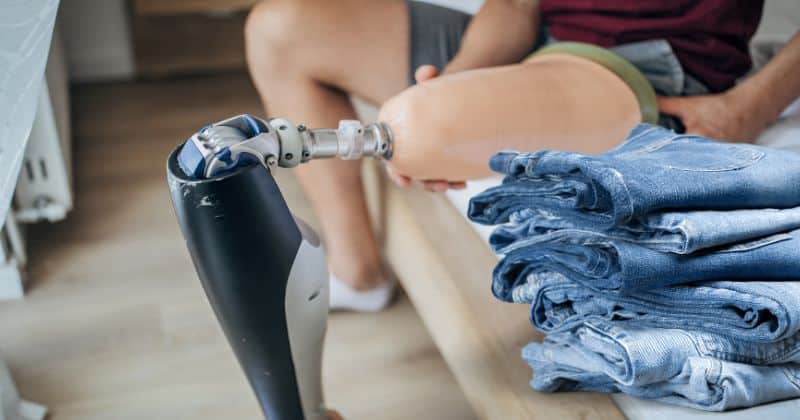
The clothing allowance covers clothing damaged by prosthetics or appliances, and/or medications that have been prescribed by a physician to treat a skin condition. The types of appliances or devices that may contribute to wear and tear of clothing include:
- Prosthetic limb
- Rigid brace or orthotic device
- Wheelchair
- Crutches
For eligibility based on a skin condition, the term “outergarments” generally includes items like shirts, blouses, pants, skirts, shorts, and other similar garments permanently damaged by qualifying appliances or medications. They do not include hats, scarves, socks, or underwear.
According to the Veterans Benefits Administration manual M21-1 XIII.i.8.A.1.b, irreparable damage does not include stains that are removable through regular laundering or dry cleaning.
How Much Is the Current Clothing Allowance?
In 2026, the clothing allowance amount is $1,053.19 (this rate is adjusted annually for inflation based on the COLA increase).
If a veteran is incarcerated in a federal, state, or local institution for more than 60 days and is provided clothing by that institution, the clothing allowance is subject to a prorated reduction of 1/365th for each day of incarceration after the initial 60 days.
Can You Have More than One Clothing Allowance?
In some cases, a veteran can receive more than one clothing allowance per year. In order to qualify, the veteran must have either:
- More than one service-connected disability requiring use of an appliance, or skin condition requiring prescribed medication, that affect separate articles of clothing;
- One service-connected disability requiring use of an appliance, or skin condition requiring prescribed medication, that affects separate articles of clothing; or
- More than one service-connected disability requiring use of an appliance, or skin condition requiring prescribed medication, that together end to wear and tear and/or irreparably damage a single article of clothing at a faster rate than either would independently.
Examples
1. Two Conditions Damaging Separate Pieces of Clothing
A veteran lost his right leg below the knee while in combat. He uses a prosthetic leg, which causes his pants to wear out quickly. The veteran also has a skin condition on his right arm for which his physician has prescribed a strong medication that irreparably stains his shirts.
Therefore, because the veteran has two distinct service-connected conditions that cause wear and tear and irreparable damage on two separate articles of clothing, the veteran is entitled to two annual clothing allowances.
2. One Condition Damaging Multiple Pieces of Clothing
A veteran has a service-connected skin condition that affects his whole body, and is prescribed a medication that irreparably damages both his pants and his shirts. Therefore, because one disability affects two distinct articles of clothing, the veteran is entitled to two annual clothing allowances.
3. Two Conditions Damaging a Single Piece of Clothing
A veteran uses a rigid knee brace for service-connected severe arthritis in the left knee, which rubs his pants and causes them to wear out quickly. The veteran also has a service-connected skin condition affecting the left leg, for which he uses a strong prescribed medication that irreparably stains his pants.
As a result of the knee brace and the medication, his pants wear out at a faster rate than they would due to the knee brace or the skin medication alone. Therefore, although both the knee brace and the skin medication affect the same article of clothing (the pants), the veteran is entitled to two annual clothing allowances.
How to File a Claim
In order to claim a clothing allowance, the veteran must fill out VA Form 10-8678, Application for Annual Clothing Allowance. The veteran completes the first page and returns it to the PSAS at their local VA Medical Center. The form can also be mailed or faxed to the VA.
If the veteran has not yet been granted service connection for the underlying condition, they must first file a claim for that condition (VA Form 21-526EZ) with the Regional Office to establish that the disability is service-connected.
Submission and Deadlines
New applications must be received by the VA on or before August 1st o to be paid for that calendar year. Typically, these payments are made in a lump sum between September 1st and October 31st.
Do Veterans Need to Re-Apply Every Year?
A major VA policy change went into effect on December 29, 2022, through the Mark O’Brien Clothing Allowance Improvement Act. Under the old rules, almost every veteran had to re-apply every single year.
Under the new rules, if your disability is permanent (static) and your device or medication needs are unlikely to change, your clothing allowance will now auto-renew and you no longer need to submit VA Form 10-8678 yearly.
You Only Need to Re-Apply When…
- The medical condition changes
- A new device is prescribed
- You are claiming an additional (multiple) allowance for the first time
Stay Informed About VA Benefits
Want more tips, resources, and updates to help navigate your VA benefits? Join our VETS Advantage newsletter for expert insights, attorney advice, and helpful guides tailored to veterans and their families.
Sign up for free today →
Join Thousands of Veterans!
Get the weekly newsletter that has helped veterans all over the country in the fight for their rightful benefits
join for freeWritten By
Mary Klements
Claims Advocate
Originally from Covington, GA, Mary grew up in northern Idaho, where she pursued the Technical Communication program at Eastern Washington University. She moved to Florida in 2013, and has been with Hill & Ponton since early 2014.