
For decades, Fort McClellan was home to thousands of U.S. soldiers—and a secret more toxic than war itself. In this eye-opening documentary, we uncover the long-buried truth behind Agent Orange exposure at Fort McClellan, a military base once shrouded in silence.
Veterans and whistleblowers share chilling testimonies about toxic contamination, devastating health consequences, and a growing body of evidence that points to chemical testing and dioxin exposure far from the battlefields of Vietnam.
Why has the U.S. government refused to acknowledge these claims? Why are so many veterans still denied benefits and recognition? Through declassified documents, interviews with scientists, legal experts, and affected families, this film explores the disturbing possibility of a government cover-up—and the fight for justice that continues today.
Topics covered:
- The chemical history of Fort McClellan
- Veterans’ health struggles linked to Agent Orange
- Legal and VA benefit roadblocks
- The silence of official institutions
Kerry Baker:
When we started looking at Fort McClellan, we found a lot of the same herbicides used all over Fort McClellan, those was used in Vietnam.
Kerry:
If that’s true,
Kerry:
Why aren’t benefits easier to get for Fort McClellan veterans? There’s a lot of reasons for that.
Kerry:
Fort McClellan was home to the Army Chemical Corps. Well, the Army Chemical Corps were the people
Kerry:
in Vietnam that sprayed herbicides,
Kerry:
with the exception of the ones from C-123s, that was the Air Force Ranch Hand.
Kerry:
But the ones sprayed out helicopters, the ones sprayed out huge buffalo turbines on the ground, all the base perimeters, all of that was the Army Chemical Corps.
Kerry:
the Army Chemical Corps, they weren’t just radiation, nerve gas, mustard gas,
Kerry:
they were also the ones that sprayed herbicides in Vietnam. That took some kind of know-how. A lot of that know-how,
Kerry:
came from Fort McClellan.
Kerry:
the reason that is, because once we look at all the old
Kerry:
old records, just the sheer volume of herbicide use that we found on the base, it’s
Kerry:
not accounted for by your average
Kerry:
weed control activities, okay? Or your average
Kerry:
spring of foliage on the rights of way, or, you know, the typical places people would use herbicides back then.
Kerry:
The quantity was outrageous.
Kerry:
Before we get to that, it helps to understand what a herbicide agent is.
Kerry:
Funny, the regulations that came from the Agent Orange Act and VA’s regulations, they never mentioned Agent Orange, okay? They refer to herbicide agents. And so you have to understand what a herbicide agent for the purpose of the presumptive service connected disabilities are, okay? If you look in VA’s regulation where it
Kerry:
talks about what disabilities you can get benefits for if you’re a Vietnam veteran, it will tell you that if on active duty, you are exposed to a herbicide agent as defined at Title 38 CFR,
Kerry:
Section 3.307A6,
Kerry:
that chunk right there says you have to be exposed on active duty to one of the defined herbicide agents.
Kerry:
then you go to the other regulation at 3.307, and it tells you what a defined herbicide agent is, and it tells you that 2,4-D, 2,4-5-T and its contaminant dioxin, cacodylic acid, and picloram are herbicide agents for the purposes of VA benefits.
Kerry:
Agent Orange was a 50-50 mixture of 2,4-D and 2,4-5-T.
Kerry:
The 2,4-5-T based herbicide is the one that was contaminated with dioxin.
Kerry:
it’s the most potent dioxin on the planet.
David O. Carpenter:
They all had some dioxin, but Agent Orange was the worst. It was never intentional. It was a byproduct of the manufacture.
David:
So It was a relatively minor component,
David:
it is very, very persistent and extraordinarily toxic. It’s probably the most dangerous chemical that people have ever made.
David:
It’s a very dangerous thing. It changes DNA, and so it can have multi-generational effects.
David:
You know, it causes cancer, and the birth defects are from that same mechanism. It damages DNA that can cause cancer, but in a fetal development that can cause these various birth defects.
David:
Basically anencephaly, the absence of a brain is the most significant one, but the deformities of arms and legs and cleft lips, cleft palates, all of those are very, very common.
David:
Well, if it affects DNA, it’s going to have multi-generational effects.
David:
And that, of course, can be through the father as well as through the mother.
Kerry:
So what does that mean for Fort McClellan? Well, for example, we have records from the 70s that show the military used thousands of gallons of straight 2,4-5-T, which is the dangerous component in Agent Orange. They used thousands of gallons of 2,4-D, which is the other component in Agent Orange.
Kerry:
And there was also thousands of gallons of arsenic-based herbicide used in Fort McClellan. So you literally had every defined herbicide agent,
Kerry:
it’s in VA’s regulations, used all over Fort McClellan.
Kerry:
To the point where there’s a few years in the 70s that we have the actual evidence of how much each of each herbicide was used.
Kerry:
And when you had those together,
Kerry:
you could literally cover every square acre of Fort McClellan from base, from border to border of the base, something
Kerry:
like a hundred times more, then you could cover every square acre of Vietnam
Kerry:
with all the herbicides sprayed there. That is tremendous. That is not normal weed control.
Kerry:
When I say the ties to Vietnam and Fort McClellan are deep, they are just that. But no one ever put that together.
Kerry:
So you would think, all right, once we found all that information,
Kerry:
that it would be relatively easy to help veterans get benefits. Okay, that’s not the case.
Kerry:
VA has a list of places that DOD has acknowledged that it used what they call tactical herbicides.
Kerry:
McClellan is not on that list.
Kerry:
so it’s kind of like VA would say, we acknowledge you were exposed to this dioxin
Kerry:
That was in this 245T
Kerry:
That was used on Fort McClellan, but that’s a commercial herbicide because it was used on Fort McClellan. If it was used in Vietnam, it’s a tactical herbicide and somehow more dangerous. That’s just not true.
Kerry:
There’s no such thing as a tactical herbicide.
Kerry:
There’s just a herbicide used in a tactical environment.
Kerry:
VA wanted people to think if you used it in your front yard, it wasn’t going to be dangerous.
Kerry:
But if you used it in Vietnam, then it can cause all kinds of disabilities. That’s the level of idiocracy that went into some of these claims.
Kerry:
So you’re talking tens of thousands of people. It’s just something the government doesn’t want out of the bag.
Kerry:
And they’re willing to deny veterans claims to keep it in the bag.
Kerry:
Most of what the base was known for for a number of years, you know, with people filing claims based on exposure, was the Army Chemical Corps and the Monsanto plant was a PCB plant that operated for a number of decades right outside, not right outside, but pretty close outside the base. Those were the exposures that were known. You know the Army Chemical Corps, they’re the ones that would test nerve agents, mustard gas. If you were going through there,
Kerry:
radiological decontamination, you know, nuclear biological chemical warfare, that’s kind of what they did.
Kerry:
The PCBs from the Monsanto plant, you know, that was the type of exposure that a lot of people focused on. Because they were significant.
Kerry:
There was a class action lawsuit
Kerry:
late 20th century. It was the largest one in the country at the time.
Kerry:
the city of Anniston that sued Monsanto. It was a huge settlement.
Kerry:
Monsanto had to buy up whole tracts of land because they were so contaminated.
Kerry:
The wells were contaminated. All waterways were contaminated. The PCBs were airborne.
Kerry:
They detected PCBs in the bark of trees right beside the base. That can only happen with airborne PCBs.
David:
Tree bark has enough fat in
David:
That it becomes a passive sampler for the PCBs that are volatilized that are in the air.
David:
Well, PCBs are all man-made.
David:
There are in fact 209 different PCB molecules.
David:
PCB1 has one chlorine
David:
PCB 209 has ten.
David:
They can be located at different sites around the molecule.
David:
PCBs with a lot of chlorines
David:
are very difficult to break down.
David:
Those are the ones that most of us have primarily in our bodies.
David:
PCBs with high chlorines, we get primarily from food.
David:
All animal fats are contaminated with PCBs, all coming from
David:
The Monsanto plants in Anniston and Sauget, Illinois.
David:
They stay in your body for a long time.
David:
One particular PCB conjurer has a half-life of about 18 years.
David:
I usually say if you had a Big Mac for dinner last night,
David:
You’re going to get PCBs in it, and you’re going to have half of those PCBs in your body 10 years from now.
David:
The fact that they’re so persistent is part of the problem here.
David:
PCBs cause cancer.
David:
Just like lead, they cause
David:
Deficits of IQ,
David:
cause ADHD,
David:
they cause heart disease, they cause diabetes, they interfere with reproduction, they suppress the immune system,
David:
they increase risk of high blood pressure, you name it.
David:
They act on many different systems. They interfere with thyroid function.
David:
we all have PCBs in our body because they’re so
David:
present everywhere. But people that live near contaminated sites,
David:
and the groups that I studied the most are residents of Aniston,
David:
The PCBs in the sediments of the rivers don’t go away.
David:
The PCBs on land don’t go away.
David:
We’re all going to die with PCBs in our bodies, even though they haven’t been manufactured since the late 70s.
Kerry:
So if it’s getting to the edge of the base, it’s getting on the base. And PCBs, you know, you can’t manufacture them no more. They’re really not good for you. You know, they’re right up there with the type of herbicides used in Vietnam.
Larry Stewart:
I actually served at Fort McClellan, Alabama, which is now a closed military, army military base.
Larry:
Now I was about 40 years old, early 40s,
Larry:
I had prostate cancer. So I didn’t know exactly what to do. I did check with
Larry:
at
Larry:
VA Center near me at the time. And they basically asked the questions, were you in Vietnam? I said, no.
Larry:
They asked if I was in one of the other places, I assume where the presumptive sites for people with prostate cancer in connection with Agent Orange. And I told them I was at Fort McClellan and a very nice veteran service officer. So, well, you know, if you had Fort McClellan, it’s almost like being in Vietnam. In fact, you might’ve had a better chance in Vietnam not getting it as, you know, than being at Fort McClellan because it’s a very hot spot there with a bunch of toxins and so forth.
Larry:
well in the meantime, I still heard stories about Fort McClellan
Larry:
the civilian litigation that was going on with the
Larry:
people being victimized by the,
Larry:
the Monsanto plant that, you know, produced a lot of toxins there.
Larry:
made me think about my time at Fort McClellan in terms of experience that I had there, you know, with the training and so forth. But again, that had been, you know, a long time ago,
Larry:
talking to experts and people in the
Larry:
urology field, they told me that, you know, just in general, that I might’ve picked up something there when I was training there. And the type of prostate cancer I had, a very aggressive cancer at a very young age that more likely than not at that time, you know, it came from being exposed to it in my military career. And so I really got busy at that point looking, you know, around and talking to other folks that had been there and found out that many of them had very similar stories as mine. And so after the passage of the PACT Act, I decided I needed
Larry:
to get my story before someone who could possibly give me some legitimate information about the relationship between chemicals and toxins that had been stored at Fort McClellan. Because in addition to being at McClellan for the officer basic training,
Larry:
I was in a reserve unit that also did law enforcement duties at Fort McClellan. So, at Anniston Army Depot and everybody, and both as a student and as now as a platoon leader, we train and operate at Pelham Range, which is a military site just outside of Fort McClellan.
Larry:
I, after talking to several people and several other folks who had
Larry:
been victimized by the same symptoms that I was victimized and the same kinds of disease, I started to look further. And I found out from those general inquiries that
Larry:
I guess politically it was
Larry:
not an easy route to go and to down that road as far as Fort McClellan was concerned that folks would throw roadblocks in every direction. And just getting information was unbelievable.
Larry:
And I even talked to some of the veteran service organizations and a couple of attorneys in the field and nobody wanted to touch the Fort McClellan story,
Kerry:
And we’re talking
Kerry:
at least a 30-year time span.
Kerry:
tens of thousands of people. It’s just something the government doesn’t want out of the bag.
Kerry:
And they’re willing to deny veterans claims to keep it in the bag.
Kerry:
But the facts and the law as applied to those facts are on our side.
Kerry:
This isn’t something that should take an act of Congress, although Congress could act.
Kerry:
This is something that somebody with a little bit of knowledge of the use of these herbicides, what the law says about them, can look at these facts and go, yeah, we have to grant
Kerry:
these folks benefits because they can show the exposure, they can show the exposures to something that VA defines as a herbicide agent. And if they have one of those diseases listed as presumptive, then it should be an automatic service connection.
Kerry:
So it’s the low-hanging fruit. It’s what’s affecting the most people.
Kerry:
But you may have somebody with a cancer that’s not on that presumptive list. That doesn’t mean that that case is going to lose because we still have the exposure to all the PCBs. If you’re on Fort McClellan, you are likely exposed to that stuff too, as well as
Kerry:
herbicide agents.
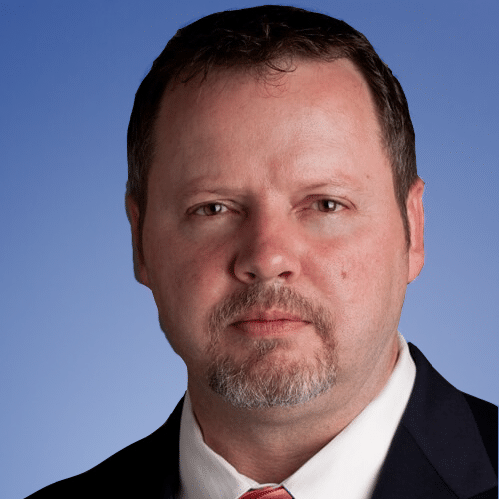
Agent Kerry Baker
Kerry is a combat-disabled U.S. Marine Corps veteran who served from 1987 to 1998, participating in conflicts in Panama, Somalia, and the Persian Gulf (Desert Shield and Desert Storm). He is the founder of Warrior Advocacy, LLC (est. 2019), which supports disabled veterans and survivors.
From 2013 to 2019, he worked at Chisholm, Chisholm & Kilpatrick (CCK) as a VA appellate practitioner and Claims’ Strategy Supervisor. Before that, he was the Chief of Legislative and Policy Staff at the VA’s Veterans Benefits Administration, overseeing major initiatives on Agent Orange, PTSD, military sexual trauma, and environmental hazards. He led the adjudication of over 150,000 Vietnam Agent Orange-related Nehmer claims, the largest of its kind.
Kerry has also held roles with Disabled American Veterans (DAV), including Assistant National Legislative Director, and Non-Attorney Practitioner before the U.S. Court of Appeals for Veterans Claims. He supervised DAV National Service Offices between 2002 and 2005.
He joined Hill and Ponton, P.A. as a full-time appellate practitioner in June 2020.
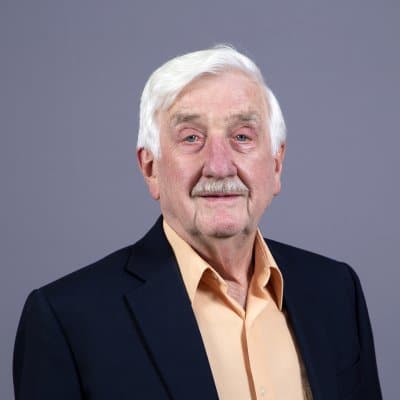
Dr. David O. Carpenter
David O. Carpenter is a public health physician who received his MD degree from Harvard Medical School. He chose a career of research and public health rather than clinical practice. His earlier work focused primarily on basic neurobiology using electrophysiological techniques. This led to more neurotoxicological approaches in study of the mechanisms whereby environmental contaminants cause reductions in IQ and altered behavior in children. After a research position at the National Institute of Mental Health and the Armed Forces Radiobiology Research Institute in Bethesda, Maryland, he was recruited to be the Director of the Wadsworth Center of Laboratories and Research of the New York State Department of Health (NYSDOH).
In this position, he played a major role in the creation of the former School of Public Health as a partnership between the University at Albany and the New York State Department of Health, and became the first Dean of the school when it was officially established in 1985. He stepped down as Dean in 1998 and joined the faculty as Professor of Environmental Health Sciences.
In 2001, he worked to establish the Institute for Health and the Environment as a mechanism to promote interdisciplinary research activities across the various schools and colleges at the University at Albany. In 2011, the Institute was designated as a Collaborating Centre of the World Health Organization in Environmental Health. The third re-designation was received in July 2019, followed by a fourth re-designation in 2023.
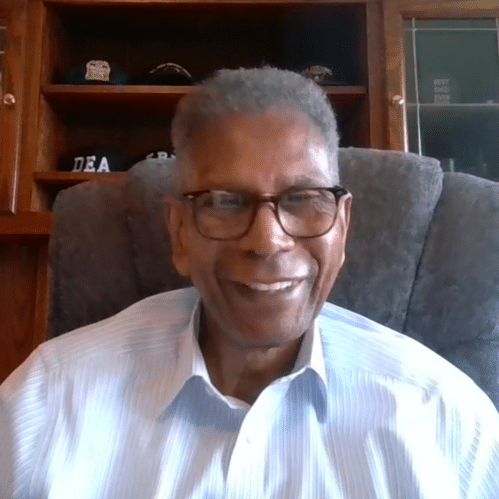
Larry Stewart
Served 21 years in the Reserves and was diagnosed with aggressive prostate cancer decades after his time at Fort McClellan. Like many, he was unaware of the installation’s toxic history until he began connecting the dots between his diagnosis and potential chemical exposure. After facing denials and bureaucratic delays, Stewart got help from Hill & Ponton—and successfully appealed his case before an Administrative Law Judge. His story shows that even when the odds feel stacked against you, there’s still a path forward.
You’re Not Alone
Hill & Ponton was founded by Vietnam veteran Brian Hill and is dedicated solely to assisting disabled veterans and their families. If your Agent Orange exposure claim was denied or underrated by the Department of Veterans Affairs, our disability lawyers will fight on your behalf to secure the compensation you deserve.