
Fort Detrick
Frederick, MD
 Known Toxins
1
 Years of Operation
1931-Present
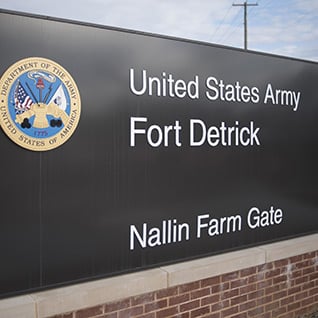
Base Background
Fort Detrick was originally a military airfield, supporting pilot and bomber training through World War II. The government temporarily renamed the site Camp Detrick in 1943 and established the US Army Biological Warfare Laboratories. Biological research facilities expanded on the base. After the Nixon administration outlawed biological research in the 60’s, studies shifted to prevention and treatment. Fort Detrick is currently home to the Institute of Infectious Diseases, the National Cancer Institute, and U.S. Army Medical Research and Materiel Command.
Fort Detrick’s Toxic Exposure History
One of the most contaminated areas is Area B, which covers about 399 acres. Area B includes an old municipal landfill, waste disposal zones, an animal farm used for research, a former shooting range, and open fields used for experimental or research activities. Historically, during the mid-20th century and Cold War era, Fort Detrick used Area B and neighboring zones to bury chemical and biological waste, including organic solvents like trichloroethylene (TCE) and perchloroethylene (PCE), drums of hazardous materials, biological agents, and radiological tracer materials.
Because of those contamination sources, the EPA placed Fort Detrick’s Area B groundwater on the National Priorities List (Superfund list), calling for long-term remediation. Environmental monitoring continues and new information emerges about health effects due to exposure.
If you lived or worked at or near Fort Detrick, you may have been exposed to the toxins below and be eligible for VA benefits. Get in touch with our VA disability lawyers for a free evaluation of your case.
Known Toxins
The following chart outlines the toxins associated with this military location and the potential effects of exposure.*
| Toxin | Potential Effects & Strength of Evidence Needed | |||
|---|---|---|---|---|
| Strong | Good | Limited | ||
| PFAS (Firefighting Foam) | Potential Effects & Strength of Evidence Needed | - | - | Testicular cancer Renal (kidney) cancer... Prostate cancer |
*Effects are according to the Center for Disease Control and Prevention’s Agency for Toxic Substances & Disease Registry unless otherwise noted.
Winning Compensation for Toxic Exposure
Veterans and civilians who lived or worked at or near Fort Detrick could be eligible for compensation (and other veterans benefits in Maryland or other states) if they developed health conditions associated with the toxins present at the base. This would require:
Documenting the time spent at the base using service records and other documentation
Gathering comprehensive medical evidence
Obtaining expert medical opinions to establish a link between the diagnosed medical conditions and the toxic exposure
Making a VA disability claim or pursuing a lawsuit
An experienced VA disability lawyer may be able to assist you in winning your case. Please contact us for a free case evaluation.