
Galena Air Force Station
Galena, AK
 Known Toxins
6
 Years of Operation
1942- 2011
Base Background
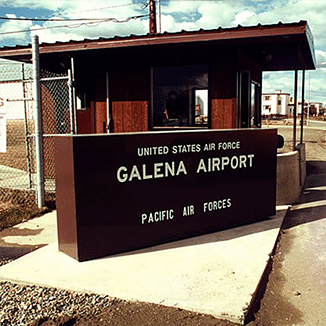
Galena Air Force Station, established in 1951, was located 6.4 miles southeast of Galena (approximately 45 miles east of Nulato, 270 miles west of Fairbanks, and 350 miles northwest of Anchorage), and is no longer operational. Originally built as an airfield during World War II, it later served as a base for the Pacific Air Force’s 611th Air Support Group (headquartered at Elmendorf AFB). All permanent military personnel and aircraft were withdrawn by 1993, leaving the base in caretaker status. The Base Realignment and Closure Commission voted to close the site, then known as the Galena Forward Operating Location, on August 25, 2005, and the Air Force was required to complete that closure and terminate all military activities there by September 15, 2011.
Toxic Exposure at Galena Air Force Station
The Air Force’s 2011 preliminary assessment identified more than 50 potentially contaminated sites at Galena, and Alaska’s environmental regulators continue to oversee cleanup of petroleum, solvents, and other hazardous chemicals left behind by decades of military fuel handling, vehicle maintenance, and firefighting operations.
Volatile Organic Compounds (VOCs)
Tetrachloroethene (PCE) and trichloroethylene (TCE), used to maintain vehicles, aircraft, ammunition, and electronics, contaminated soil and groundwater at multiple sites, including a dedicated TCE site along the airfield’s south apron and another along the west perimeter road.
PFAS Contamination
Due to the use of firefighting foam (AFFF), the site is heavily contaminated with per- and polyfluoroalkyl substances (PFAS), putting those stationed there after 1967 at risk for serious health conditions. A 2016 preliminary assessment identified nine potential source areas for PFAS exposure, and a 2018 site inspection narrowed the priority list to five: the Fire Protection Training Area, two former fire stations, a vehicle maintenance facility, and the sanitary sewer system. The Department of Defense’s June 2026 update projects the broader cleanup effort at Galena will last through 2032.
Other Exposures
- Metals: leaded gasoline, aviation gasoline, and waste oils left metal contamination at sites across the former base.
- Polychlorinated Biphenyls (PCBs): electrical transformers at Galena’s facilities used PCB oil, and at least one former disposal site has confirmed PCB soil contamination.
- Pesticide contamination: DDT was documented in soil at a former vehicle maintenance site, and Alaska’s environmental regulators describe widespread, low-level pesticide residue across the airport consistent with historic area-wide insect-control spraying.
- Petroleum contamination: petroleum-based fuels, oils, lubricants, and antifreeze used for aircraft, vehicles, and heating left contamination across the former base, including crushed fuel drums documented along eroding banks of the Yukon River.
Anyone stationed at or working around Galena while these chemicals were in use on base could have been exposed without any way of knowing it at the time. A diagnosis tied to that exposure can be years or even decades after the actual exposure. If you developed a medical condition related to toxic exposure at Galena Air Force Station, our VA disability lawyers may be able to help you obtain compensation. Get a free case evaluation to explore your legal options.
Known Toxins
The following chart outlines the medical conditions associated with toxic exposure at this base, classified by the strength of evidence required (strong, good or limited).* Please keep in mind that it is not a complete list.
| Toxin | Potential Effects & Strength of Evidence Needed | |||
|---|---|---|---|---|
| Strong | Good | Limited | ||
| Petroleum | Potential Effects & Strength of Evidence Needed | - | - | Multiple myeloma Laryngeal cancer |
| PFAS (Firefighting Foam) | Potential Effects & Strength of Evidence Needed | - | - | Testicular cancer Renal (kidney) cancer... Prostate cancer |
| Polychlorinated Byphenyls (PCBs) | Potential Effects & Strength of Evidence Needed | Thyroid disorders Hypothyroidism Porphyria toxic... Developmental Delay Decreased I.Q../Mental retardation Cirrhosis Chloracne Behavioral problems ADD/ADHD, hyperactivity |
Peripheral neuropathy Pancreatic cancer... Menstrual disorders Lymphoma non Hodgkin's Low birth weight/Small for Gestational Age Immune suppression Hepatocellular cancer (Liver cancer) Dyslipidemia, hypercholesterolemia Delayed growth Congenital malformation Cranio Facial Cognitive impairment (includes impaired learning, impaired memory, and decreased attention span) Bronchitis chronic Acute hepatocellular injury (Hepatitis) Abnormal sperm (morphology, motility, and sperm count) |
Testicular cancer Reduced Fertility Female (infertility and subfertility)... Parkinson's disease/Movement disorders Hypoactivity Hypertension Hyperkeratosis/Hyperpigmentation Hearing loss Endometriosis Diabetes Type I Breast cancer Bone cancer/Ewings sarcoma Altered time to sexual maturation (accelerated or delayed puberty) Altered sex ratio |
| Tetrachloroethene (PERC) | Potential Effects & Strength of Evidence Needed | - | - | - |
| Trichloroethylene (TCE) | Potential Effects & Strength of Evidence Needed | Acute hepatocellular injury (Hepatitis) |
Scleroderma Renal (kidney) cancer... Psychiatric disturbances Lymphoma non Hodgkin's Hepatocellular cancer (Liver cancer) Fetotoxicity (Miscarriage/spontaneous abortion; stillbirth) Decreased Coordination/ Dysequilibrium Cirrhosis Childhood Leukemias Cardiac congenital malformations Autoimmune antibodies, positive ANA Arrhythmias |
Trigeminal neuropathy Testicular cancer... Systemic Lupus Erythematosus Raynaud's phenomenon Prostate cancer Peripheral neuropathy Pancreatitis Pancreatic cancer Oral clefts (cleft lip and palate) Neural tube defects/CNS malformations Nephrotic syndrome Multiple myeloma Lung cancer Low birth weight/Small for Gestational Age Immune suppression Hodgkin's Disease (lymphoma) Genitourinary malformations (includes cryptorchidism, hypospadias) Cognitive impairment (includes impaired learning, impaired memory, and decreased attention span) Choanal atresia Cervical cancer Brain cancer adult Adult-Onset Leukemias ADD/ADHD, hyperactivity Acute tubular necrosis |
| Volatile organic compounds (VOCs) | Potential Effects & Strength of Evidence Needed | Rhinitis irritant |
- | - |
*Effects are according to the Center for Disease Control and Prevention’s Agency for Toxic Substances & Disease Registry unless otherwise noted.
Paths to Compensation
Veterans who served at Galena Air Force Station and are experiencing health issues could be entitled to VA disability compensation and other veteran benefits. This would require:
- Documenting the time spent at the base using service records and other documentation
- Gathering comprehensive medical evidence
- Obtaining expert medical opinions to establish a link between the diagnosed medical conditions and the toxic contamination
Hill & Ponton’s VA-accredited lawyers have decades of experience winning toxic exposure claims. Get in touch for a free evaluation: we focus exclusively on VA disability law and work on a contingency basis, with no upfront fees.