
Shemya Air Force Base (Eareckson Air Station)
Eareckson Station, AK
 Known Toxins
2
 Years of Operation
1943-1994
Base Background
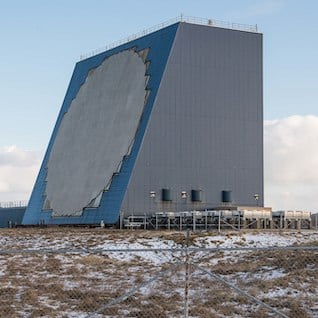
In 1943, construction began on the airfield at Shemya Island, in the Near Islands group of the western Aleutian Islands, of a military base to support U.S. operations against Japanese forces in the Kuril Islands during World War II. The installation became a Cold War-era Air Force base hosting radar and intelligence-gathering missions, including the Cobra Dane radar system, operational since 1977 for missile-warning and space-tracking. Shemya Air Force Base was renamed Eareckson Air Station in 1993 and was downsized to a caretaker, contractor-operated status in 1995, a status it retains today while the Cobra Dane mission continues.
Toxic Exposure at Eareckson Air Station
Decades of fuel handling, firefighting-foam use, and industrial activity around Shemya AFB’s water supply and hangar areas left documented contamination that Alaska’s environmental regulators and the Air Force continue to investigate and monitor today.
Volatile Organic Compounds (VOCs)
Trichloroethene (TCE) was detected above state cleanup levels in surface water, sediment, and groundwater at the installation’s Water Gallery, the collection point for the base’s drinking water supply. The area is monitored every two years until TCE concentrations fall below cleanup levels for two consecutive sampling events.
Petroleum Contamination
Petroleum-contaminated soil was identified near the Water Gallery in 1989 and excavated, with the affected areas backfilled with clean sand. Fuel and solvent spill areas elsewhere on the installation have been investigated as part of the base’s environmental restoration program since the 1980s.
PFAS Contamination
Per- and polyfluoroalkyl substances (PFAS) were first identified at the Water Gallery site in 2018, tied to firefighting-foam use at Hangars 3 and 4. Perfluorooctanoic acid (PFOA) and perfluorooctane sulfonate (PFOS) were detected in soil and groundwater above screening levels, with the plume extending from the hangars south to the Water Gallery and on to the Pacific Ocean. A remedial investigation was completed in 2023 and cleanup work is expected to continue through 2036, according to a DoD June 2026 update.
Illnesses linked to this kind of toxic exposure can take years or even decades to appear, so someone stationed at Shemya/Eareckson while these chemicals were in the water supply and surrounding soil might only now be connecting a new diagnosis to their time there. The Hill & Ponton VA disability lawyers may be able to assist in obtaining compensation. Get a free case evaluation to explore your options.
Known Toxins
The following chart outlines the medical conditions associated with toxic exposure at this base, classified by the strength of evidence required (strong, good or limited).* Please keep in mind that it is not a complete list.
| Toxin | Potential Effects & Strength of Evidence Needed | |||
|---|---|---|---|---|
| Strong | Good | Limited | ||
| PFAS (Firefighting Foam) | Potential Effects & Strength of Evidence Needed | - | - | Testicular cancer Renal (kidney) cancer... Prostate cancer |
| Trichloroethylene (TCE) | Potential Effects & Strength of Evidence Needed | Acute hepatocellular injury (Hepatitis) |
Scleroderma Renal (kidney) cancer... Psychiatric disturbances Lymphoma non Hodgkin's Hepatocellular cancer (Liver cancer) Fetotoxicity (Miscarriage/spontaneous abortion; stillbirth) Decreased Coordination/ Dysequilibrium Cirrhosis Childhood Leukemias Cardiac congenital malformations Autoimmune antibodies, positive ANA Arrhythmias |
Trigeminal neuropathy Testicular cancer... Systemic Lupus Erythematosus Raynaud's phenomenon Prostate cancer Peripheral neuropathy Pancreatitis Pancreatic cancer Oral clefts (cleft lip and palate) Neural tube defects/CNS malformations Nephrotic syndrome Multiple myeloma Lung cancer Low birth weight/Small for Gestational Age Immune suppression Hodgkin's Disease (lymphoma) Genitourinary malformations (includes cryptorchidism, hypospadias) Cognitive impairment (includes impaired learning, impaired memory, and decreased attention span) Choanal atresia Cervical cancer Brain cancer adult Adult-Onset Leukemias ADD/ADHD, hyperactivity Acute tubular necrosis |
*Effects are according to the Center for Disease Control and Prevention’s Agency for Toxic Substances & Disease Registry unless otherwise noted.
Paths to Compensation
Veterans who were exposed to the toxins at Shemya Air Force Base / Eareckson Air Station could be entitled to VA compensation and other disabled veterans benefits. Winning VA disability requires:
- Documenting the time spent at the base using service records and other documentation
- Gathering comprehensive medical evidence
- Obtaining expert medical opinions to establish a link between the diagnosed medical conditions and the toxic exposure
Hill & Ponton’s VA-accredited lawyers know what it takes to win a toxic exposure claim. We specialize in disability law and work on a contingency basis, with no upfront fees.