
Veterans living with PTSD who watched their blood pressure climb year after year may be able to claim the hypertension driven by the chronic stress of PTSD as a secondary service-connected condition, with its own VA rating (up to 60%) and its own monthly compensation.
- The VA rates hypertension from 10% to 60% under Diagnostic Code 7101, based on blood pressure readings and whether continuous medication is required.
- Veterans whose blood pressure is controlled by medication can still earn a 10% rating if they have a documented history of elevated diastolic readings.
- A combined PTSD and hypertension rating raises a veteran’s overall disability rating and can help support a claim for Total Disability based on Individual Unemployability (TDIU).
- A medical nexus opinion stating that PTSD is “at least as likely as not” to have caused or worsened the high blood pressure is the single most important piece of evidence.
Research shows that veterans with PTSD face a greater risk of developing hypertension than non-veterans, due to chronic (long-term) stress, sleep disruption, anxiety, and repeated activation of the body’s “fight-or-flight” response.
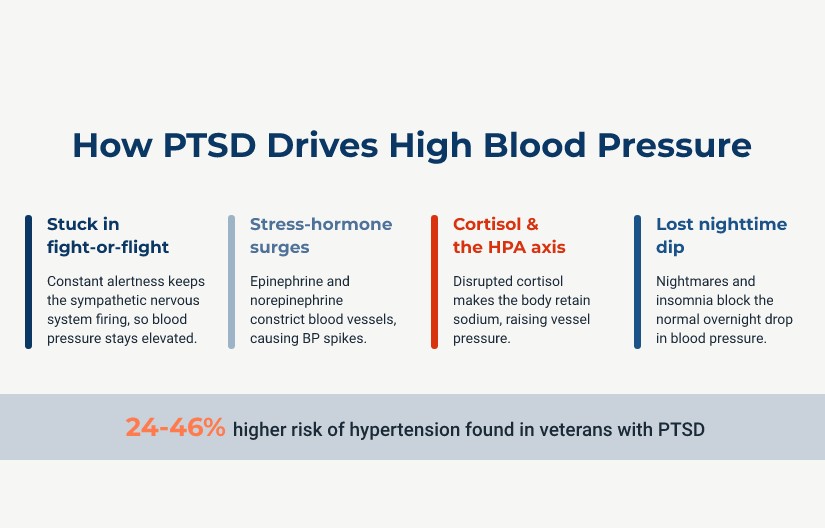
A VA study of more than 194,000 Iraq and Afghanistan veterans found that those with PTSD had roughly a 24% to 46% higher risk of developing hypertension, and that receiving PTSD treatment lowered that risk.
How Can Veterans Get VA Disability for Hypertension Secondary to PTSD?
For VA rating purposes, hypertension means the diastolic pressure (the lower number) is predominantly 90 mmHg or higher. Isolated systolic hypertension means the systolic pressure (the top number) is predominantly 160 mmHg or higher while the diastolic reading stays below 90 mmHg.
Secondary service-connected conditions are those for which the VA provides compensation for a medical condition, such as high blood pressure, that is caused or aggravated by an already service-connected disability, like PTSD. Veterans do not have to show that the secondary condition resulted directly from a specific event during military service.
This protection also covers hypertension that existed before PTSD was service connected. Under the aggravation rule of 38 C.F.R. § 3.310(b) and Allen v. Brown, you can still be compensated if your PTSD worsened a pre-existing case of high blood pressure beyond its natural progression.
To successfully claim PTSD-induced hypertension as a secondary condition, veterans need to show:
- A current hypertension diagnosis
- An existing PTSD service connection
- A medical nexus opinion, written by a qualified provider stating the condition is “at least as likely as not” caused or aggravated by the service-connected PTSD
Learn to Prepare (and Win!) Your VA Claim with Our Free Book
The Road to VA Compensation Benefits
What Ratings Can Veterans Get for Hypertension Secondary to PTSD?
Hypertension caused or aggravated by service-connected PTSD is rated under Diagnostic Code 7101 from 0% to 60% based on symptom severity and diastolic blood pressure readings. Exceptionally high systolic blood pressure may support the highest rating level of 60%.
How Does VA Evaluate High Blood Pressure?
A blood pressure reading includes two different measurements, including:
- Systolic pressure – the top blood pressure number, which measures the force of blood against artery walls while the heart contracts (beats).
- Diastolic pressure -the bottom number, which reflects the pressure inside the arteries while the heart rests between contractions (heartbeats).
Hypertension is most often more severe when the pressure is very high during the resting phase of the heart rhythm. That is why ratings are based primarily on diastolic pressure readings, although extremely elevated systolic readings may also support a high VA rating in some cases.
Because VA ratings for hypertension are based on the severity of the condition at the time of the C&P exam, veterans should request the C&P exam when their blood pressure is uncontrolled or when they are experiencing a flare-up, rather than immediately after blood pressure stabilizes (such as when meds are initially started or after medication adjustments).
To confirm hypertension, the VA generally requires at least two blood pressure measurements (taken and recorded by a healthcare professional) on at least three separate days. Layperson records will also be considered, but the physician, nurse, or another healthcare professional must also record at least two BP level measurements.
VA reviewers look for blood pressure readings that remain consistently elevated over time rather than isolated high measurements. Veterans should submit home blood pressure logs along with records from multiple VA or civilian medical visits to help show a clear pattern of ongoing hypertension.
What Is the Average VA Rating for Hypertension?
A 10% rating is the most common initial rating for hypertension. Many veterans qualify at 10% because they meet the BP level parameters and need daily medication to control blood pressure.
Higher ratings, including 20% or more, may be possible when medical records consistently show elevated readings along with a strong nexus (medical link) connecting the condition to PTSD or another service-connected disability.
A 0% rating still matters. It means the VA officially recognizes hypertension as service-connected, even though current BP readings are not high enough for monthly compensation. Getting rated at 0% gives access to VA healthcare and can make it easier to request a higher rating later, if hypertension worsens.
| Hypertension Rating | Required diastolic and systolic readings |
|---|---|
| 60% | Diastolic pressure predominantly 130 mmHg or more |
| 40% | Diastolic pressure predominantly 120 mmHg or more |
| 20% | Diastolic pressure predominantly 110 mmHg or more, or systolic pressure predominantly 200 mmHg or more |
| 10% | Diastolic pressure predominantly 100 mmHg or more, or systolic pressure predominantly 160 mmHg or more, or minimum evaluation for an individual with a history of diastolic pressure predominantly 100 mmHg or more who requires continuous medication for control. |
| 0% | Blood pressure readings fall below the compensable thresholds and are successfully controlled. |
Diastolic pressure is the primary factor the VA uses for hypertension ratings, but when systolic readings are very high (such as over 200 mmHg), it may support a rating as high as 60%.
Maximize Your Benefits
Unhappy with your VA decision? We’re here to help. Contact us for a free review of your case.
What Evidence Is Needed to Prove Hypertension Is Secondary to PTSD?
The VA does not automatically connect high blood pressure to PTSD, so the claim must be well supported by medical documentation and service records. To qualify for hypertension secondary to PTSD, veterans generally need three key types of evidence.
- A Current Hypertension Diagnosis – The VA requires a formal diagnosis from a licensed healthcare provider, not simply a list of elevated blood pressure readings. Medical records should clearly document terms like “hypertension” rather than using vague phrases such as “blood pressure concerns” or “elevated readings.”
- A Service-Connected PTSD Rating – The VA must already recognize PTSD as service-connected. If PTSD has not yet been approved, veterans should typically file the PTSD claim first or submit both claims at the same time.
- A Medical Nexus Opinion – The nexus letter is the most important evidence in a secondary disability claim. This opinion should come from a qualified medical professional such as a physician (MD or DO), nurse practitioner (NP), or physician assistant (PA). The letter should state that the hypertension is “at least as likely as not” (50% or greater probability), caused or aggravated by service-connected PTSD.
Tips on Gathering Quality Evidence
The following types of supporting evidence are recommended to strengthen a VA claim for a PTSD-induced hypertension VA rating;
- Private medical records and independent medical opinions (IMOs) – these records are used to show the medical link (nexus) between PTSD and hypertension and may help challenge unfavorable VA C&P exam findings.
- A home blood pressure log (tracked over 30 to 90 days) – to help show that the hypertension is ongoing rather than caused by other factors (such as temporary stress or isolated readings during a medical examination).
- A Statement in Support of Claim – also referred to as a “Buddy Statement” may provide additional evidence showing how hypertension affects daily life and functioning over time. Buddy Statements from spouses, relatives, or fellow veterans may help confirm chronic hypertension symptoms (such as headaches, dizziness, medication side effects, or visible stress-related episodes).
Veterans should request a copy of their C&P exam report immediately after the exam through the FOIA process. If the examiner used an inadequate rationale or relied on an outdated DBQ to deny or underrate the veteran, that is grounds for a higher-level review or Board appeal.
Did VA Deny Your Disability Claim?
Let our team review your case today!
START your free evaluation todayHow Does PTSD Cause High Blood Pressure?
Research indicates that people diagnosed with PTSD have a substantially greater likelihood of developing hypertension than those who don’t have PTSD, due to several physiological changes.
Sympathetic Nervous System Activity
PTSD may contribute to hypertension by keeping the sympathetic nervous system overly active for long periods. The sympathetic nervous system controls the body’s automatic “fight-or-flight” response, which increases heart rate, breathing, and blood pressure during stress or perceived threats. When PTSD keeps the body in a constant state of alertness, over time, blood pressure can remain elevated, and hypertension may result.
Stress Hormones (Epinephrine and Norepinephrine)
Stress hormones (epinephrine and norepinephrine) are elevated during PTSD symptoms (such as perceived threats and nightmares). These hormones raise heart rate and constrict blood vessels, which can cause repeated blood pressure spikes that may eventually become chronic hypertension.
Hypothalamic-Pituitary-Adrenal Axis Disruption
PTSD may disrupt the hypothalamic-pituitary-adrenal (HPA) axis, a body system that helps regulate stress hormones like cortisol. Abnormal cortisol levels can cause the body to retain sodium and increase the pressure inside blood vessels, contributing to high blood pressure over time.
PTSD Nightmares
Normally, blood pressure drops while a person sleeps, giving the heart and blood vessels a crucial period to rest and recover. This rest-and-recovery period is known as “nocturnal dipping.” PTSD often causes nightmares, insomnia, and other sleep disturbances known to raise blood pressure during the night.
Medical research shows that when this nocturnal dipping (nighttime decrease in blood pressure) does not occur, cardiovascular strain can increase over time, causing an increased risk of cardiovascular disease (such as hypertension and strokes).
What Should a Nexus Letter for Hypertension Secondary to PTSD Say?
A strong nexus letter for hypertension secondary to PTSD does more than simply report that two conditions (such as PTSD and hypertension) are linked. The letter should explain why the connection exists, identify the medical evidence supporting the opinion, and use language that meets VA’s legal requirements.
From a VA disability claims perspective, using the correct wording matters. The VA frequently rejects vague, unsupported medical opinions or those based only on general statements about stress and blood pressure. Therefore, a well-supported nexus letter should include:
- The healthcare provider’s qualifications/credentials and explanation of how they reached their opinion, such as reviewing medical records, treating the veteran, or performing an examination
- A clear, current diagnosis confirming hypertension
- Identification of the veteran and the service-connected PTSD diagnosis
- A medical opinion stating the hypertension is “at least as likely as not” caused or aggravated by PTSD or a declaration stating “more likely than not” which may provide even stronger support.
- An explanation of how PTSD symptoms impact hypertension, including factors such as sympathetic nervous system overactivity, disruption of the hypothalamic-pituitary-adrenal (HPA) axis, or sleep disturbance.
- References to medical research, peer-reviewed studies, or accepted clinical guidance supporting the conclusion
- A screening of other possible causes, such as age, weight, family history, or diet, and an explanation of why PTSD remains a significant contributing cause despite those factors.
Veterans can obtain nexus opinions from several sources, including:
- Private physicians
- Independent medical examiners
- Telehealth IMO providers
- Nurse practitioners
Can I use a VA doctor’s note as a nexus letter?
Yes. A treating VA physician’s opinion may support a secondary service connection claim, but the VA is not required to accept that opinion. In many cases, a detailed nexus letter from an independent private clinician carries more weight because it is often viewed as more objective and less tied to the VA system.
Why Does VA Deny Hypertension Secondary to PTSD Claims?
- No Medical Nexus: The VA may deny the claim when there is no nexus letter linking PTSD to hypertension or when the veteran submitted evidence from an unfavorable C&P examination. A detailed private medical opinion explaining the connection often strengthens a Supplemental Claim, the appeal lane created by the Appeals Modernization Act for submitting new and relevant evidence.
- Other risk factors identified: Some examiners attribute high blood pressure to factors such as age, obesity, diet, or family history. A strong nexus opinion should address these issues and explain why PTSD remains a contributing or aggravating cause.
- Normal blood pressure during the exam: Veterans sometimes receive lower ratings or denials when medication keeps blood pressure under control at the time of the examination. Medical records, prescription history, home logs, and prior elevated readings may help demonstrate the ongoing severity of the condition.
- PTSD not yet service-connected: Secondary service connection generally requires an approved primary disability. Veterans filing both claims together (PTSD and hypertension) should ask the VA to decide on a simultaneous PTSD claim before evaluating the hypertension claim.
What should I do if the claim is denied due to a missing nexus?
A Supplemental Claim is often the best choice when the VA denied the claim because of insufficient nexus evidence. This type of appeal allows veterans to submit new information, such as an Independent Medical Opinion that directly addresses the reason for the denial.
Legalities of Secondary Claims
The effectiveness of nexus letters may vary substantially depending on factors such as the provider’s experience and expertise with VA disability claims. Slight differences in wording can impact how a claim is rated. Language that is vague or unsupported by medical evidence often leads to delays or denials.
From a legal standpoint, certain phrases can strengthen or weaken a claim. Opinions using terms such as “possibly related” or “may be associated with” often fail to meet the VA’s required standard of proof. Attorneys who regularly review disability claims know which language supports a favorable decision and which wording likely triggers challenges from VA reviewers.
Hill & Ponton attorneys can choose the best path to appeal, work with qualified medical professionals to provide the type of medical opinions accepted by VA reviewers, and identify the gaps that must be addressed to ensure success.
Get a free evaluation todayContent Reviewed by

Anne Linscott is an attorney at Hill & Ponton, P.A., dedicated to helping veterans secure the disability benefits they deserve. With a strong background in finance and law, Anne brings compassionate advocacy and a deep commitment to supporting those who have served.
Written by