
When VA denies liver disease because it’s not a presumptive condition or dismisses it as merely a lab finding, many veterans feel discouraged and consider giving up on their claim. But liver disorders (including nonalcoholic fatty liver disease and cirrhosis) are ratable VA disabilities, with ratings that range from 0% to 100%. And while liver disease is not presumptive for Agent Orange, veterans can often tie it to service-connected diabetes or directly to dioxin exposure.
- The only liver-related Agent Orange presumptive condition is Porphyria Cutanea Tarda (PCT); therefore, fatty liver disease and liver cirrhosis must be directly or secondarily service-connected.
- Liver disease can be claimed as secondary to another Agent Orange presumptive condition like diabetes and hypertension.
- The most successful liver disorder claims are linked to service-connected Type 2 diabetes, a condition that is strongly associated with the development of fatty liver disease. Research shows that roughly 60% to 70% of people with type 2 diabetes also have MASLD, formerly known as NAFLD.
- The 2023 name changes to MASLD and MASH did not alter VA rating rules; both of these conditions continue to be evaluated under Diagnostic Code 7345.
Is Fatty Liver Disease a Recognized VA Disability?
Although fatty liver disease is not an Agent Orange presumptive condition, it can still qualify as a VA disability. The connection to military service can be made through direct or secondary service connection under the VA’s service connection rules (38 C.F.R. § 3.303) To qualify for benefits, veterans generally need three things: diagnosis, an in-service cause, and nexus.
- A current diagnosis of fatty liver disease, NAFLD, MASLD, or a related liver condition
- Evidence of an in-service cause or an already service-connected disability that contributed to the condition
- A medical nexus opinion linking the diagnosis to military service or to another service-connected condition.
What Is MASLD?
Fatty liver disease was previously called nonalcoholic fatty liver disease (NAFLD) and is now known as metabolic dysfunction-associated steatotic liver disease (MASLD). According to the VA Health Library, approximately one out of every three VA patients has MASLD, making it one of the most frequently diagnosed liver disorders in the veteran population.
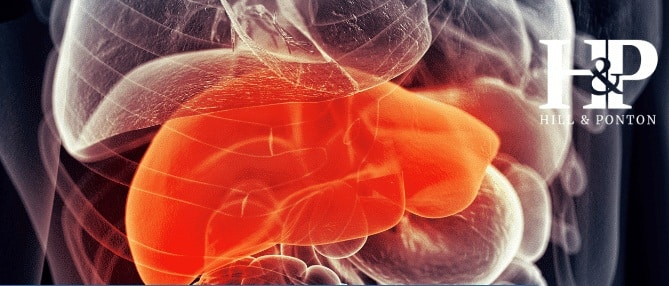
MASLD occurs when excess fat builds up in the liver; it can lead to inflammation, scarring, and, in some cases, serious liver damage. Hardening (fibrosis) of the liver develops when the liver experiences ongoing damage from conditions such as Hepatitis C.
Primary Types of Fatty Liver Disease
- MASLD, formerly NAFLD, is the umbrella term for steatotic liver disease associated with metabolic risk factors. The milder form of the disease is when excess fat collects in the liver but causes little or no inflammation.
- Metabolic Dysfunction-Associated Steatohepatitis (MASH): Previously known as NASH, this more serious condition involves fat buildup, inflammation, and damage to liver cells. Without treatment, MASH can progress to fibrosis (scar tissue formation), cirrhosis, liver failure, or liver cancer.
VA Rules on New MASLD Name
According to the American Association for the Study of Liver Diseases, the 2023 medical renaming of NAFLD to MASLD and NASH to MASH did not change the VA’s rules and no veteran needs to refile under the new names.
Can you still get a VA disability rating for NAFLD? Yes. MASH/NASH is expressly included under DC 7345. MASLD/NAFLD without cirrhosis may generally be evaluated under or analogous to DC 7345 when it produces ratable chronic liver disease symptoms The new label does not change anything in a pending claim; the rating will depend upon the symptoms and the strength of the service-connection evidence.
How Does the VA Rate Fatty Liver Disease?
Fatty liver disease, medically known as MASLD, is a ratable VA disability evaluated under the 38 C.F.R. §4.114 Schedule of ratings for the digestive system (DC 7345).
The VA rates fatty liver disease at 0%, 20%, 40%, 60%, or 100% based on symptoms and treatment, rather than on imaging test results alone. Many veterans who have the diagnosis are rated 0% because the VA examiner records the fatty liver as an asymptomatic (no symptoms) finding; it’s essential to document even mild symptoms to increase the chance of getting a compensable rating.
VA Ratings for Fatty Liver Disease (Without Cirrhosis)
Chronic liver disease without cirrhosis is evaluated under DC 7345. Cirrhosis of the liver is evaluated under DC 7312. Ratings range from 0% to 100% depending on the severity of symptoms and the impact on daily functioning. The VA updated the rating criteria for this diagnostic code on May 19, 2024.
| Criteria for DC 7345 (chronic liver disease without cirrhosis) | Rating |
|---|---|
| Progressive chronic liver disease requiring both parenteral antiviral therapy and parenteral immunomodulatory therapy, continuing for six months after treatment ends | 100% |
| Progressive disease requiring continuous medication, with substantial weight loss and at least two of: daily fatigue, malaise, anorexia, hepatomegaly, pruritus, or arthralgia | 60% |
| Progressive disease requiring continuous medication, with minor weight loss and at least two of the same symptoms | 40% |
| At least one of: intermittent fatigue, malaise, anorexia, hepatomegaly, or pruritus | 20% |
| Previous history of liver disease, currently asymptomatic | 0% |
The same rating criteria under DC 7345 are used to evaluate and rate other conditions including, but not limited to, hepatitis B, autoimmune liver disease, hemochromatosis, drug-induced hepatitis, and non-alcoholic steatohepatitis (NASH).
How Is Cirrhosis of the Liver Rated?
When fatty liver disease advances to cirrhosis, the VA evaluates the condition under DC 7312. Ratings include 0, 10, 30, 60, and 100%, and are now based on the Model for End-Stage Liver Disease (MELD) score, a medical calculation that measures the severity of liver dysfunction.
A MELD score is calculated using common blood test results, including:
- Bilirubin (a measure of liver function)
- INR (a measure of blood clotting)
- Creatinine (a measure of kidney function)
If a VA examiner did not include a MELD score in a previous rating, veterans can and should ask the VA to use a medical opinion or examination calculating one from existing lab results, and document all DC 7312 complications and functional effects.
In May 2024, the VA replaced the older rating system that relied on subjective terms such as “mild,” “moderate,” and “severe.” The new criteria evaluate objective medical data (signs and symptoms that are visible or appear on lab results); therefore, some veterans who received ratings under the previous rating system may qualify for a higher rating.
| Criteria (DC 7312, cirrhosis of the liver) | Rating |
|---|---|
| MELD score of 15 or higher, or continuous debilitating symptoms with ascites, spontaneous bacterial peritonitis, hepatic encephalopathy, variceal hemorrhage, coagulopathy, portal gastropathy, or hepatopulmonary or hepatorenal syndrome | 100% |
| MELD score above 11 but below 15, or daily fatigue with at least one episode in the last year of variceal hemorrhage, portal gastropathy, or hepatic encephalopathy | 60% |
| MELD score of 10 or 11, or signs of portal hypertension such as splenomegaly or ascites with weakness, anorexia, abdominal pain, or malaise | 30% |
| MELD score above 6 but below 10, or evidence of anorexia, weakness, abdominal pain, or malaise | 10% |
| Asymptomatic, but with a history of liver disease | 0% |
Fatty liver (DC 7345) and cirrhosis (DC 7312) cannot be rated at the same time; fatty liver ratings shift to DC 7312 once cirrhosis develops, and if liver cancer develops, it is rated under its own code.
Are Liver Diseases Presumptive Conditions?
The only liver-related condition currently included on VA’s Agent Orange presumptive list is Porphyria Cutanea Tarda and VA requires it to be at least 10% disabling within 1 year of exposure. PCT is a rare disorder that affects the skin and liver and is entirely separate from fatty liver disease.
Fatty liver disease and other liver disorders are not Agent Orange presumptive conditions, meaning that the VA will not automatically assume they were caused by herbicide exposure. But veterans may establish an indirect link when a presumptive Agent Orange condition (such as Type 2 diabetes) causes or contributes to liver disease.
The VA’s Code of Federal Regulations lists cirrhosis on a VA presumptive list (separate from Agent Orange) for certain chronic diseases under 38 C.F.R. § 3.309(a). To qualify for a compensable rating under this rule, the cirrhosis must begin within one year of separation from military service. Because cirrhosis often develops many years after toxic exposure, this claim strategy rarely applies to Agent Orange-related claims.
The PACT Act expanded the locations and time periods where herbicide exposure is presumed and added several new presumptive conditions. However, fatty liver disease, MASLD, MASH, and cirrhosis were not added to the herbicide list.
The Federal Circuit confirmed in Combee v. Brown, 34 F.3d 1039 (Fed. Cir. 1994) that a veteran is not limited to the presumptive list and may prove a direct link with individualized medical evidence.
How to Prove that Agent Orange Directly Causes Liver Disease
The most harmful toxin found in Agent Orange is called TCDD, short for 2,3,7,8-tetrachlorodibenzo-p-dioxin. After entering the body, it is stored in fatty tissue and breaks down very slowly.
Scientists estimate its half-life (the time required for the body to eliminate half of a substance) to be approximately 7 to 11 years. As a result, TCDD can remain in the body, contributing to health problems long after military exposure.
TCDD is a known liver toxin. Animal studies have linked the toxin to fat buildup in the liver, chronic inflammation, and fibrosis (scarring), which are key features of MASLD progression.
A successful direct service connection claim usually depends on a strong nexus opinion. The medical provider must explain why it is at least as likely as not that Agent Orange exposure caused or contributed to the veteran’s liver disease after considering other risk factors.
A 2022 medical science journal (MDPI) report supports the biological connection between TCDD (dioxin) and liver disease. In the report, a dioxin-contaminated population near a U.S. airbase was found to have signs of liver injury, including elevated liver enzymes and measurable fibrosis (liver scarring).
Learn How To File And Win Your VA Claim
Get our FREE book The Road to VA Compensation Benefits.
get the free book
How to Connect Fatty Liver Disease to Agent Orange Through Another Condition
For many veterans, the strongest claim strategy to service connection for fatty liver disease is through Type 2 diabetes. Diabetes is closely linked to the development of fatty liver disease, MASLD, MASH, and cirrhosis.
Because Type 2 diabetes is an Agent Orange presumptive condition, veterans do not have to prove how they developed diabetes. Instead, they may be able to show that diabetes later caused or contributed to their liver disease.
The connection is based on insulin resistance. Insulin is a hormone that helps move sugar from the bloodstream into the body’s cells. When the body becomes resistant to insulin, excess fat can begin accumulating in the liver. Over time, this can lead to metabolic dysfunction-associated steatotic liver disease (MASLD), previously known as NAFLD.
In some people, insulin resistance progresses to metabolic dysfunction-associated steatohepatitis (MASH), formerly called NASH. Unlike simple fatty liver disease, MASH involves ongoing inflammation and injury to liver cells. As damage continues, fibrosis (liver scarring) can eventually progress to cirrhosis (an advanced stage involving permanent scarring and hardening of the liver).
Medical research strongly supports the link between Type 2 diabetes and fatty liver disease; in a 2019 review study, over half of those with Type 2 diabetes also had fatty liver disease, while more than one-third developed MASH.
Other research produced similar results. A 2017 study discovered that Type 2 diabetes was one of the strongest predictors of advanced liver fibrosis among veterans with biopsy-confirmed (a procedure involving removal of a small tissue sample which is examined under a microscope) fatty liver disease.
Service Connecting Fatty Liver Disease as Secondary to Diabetes
To establish secondary service connection, veterans need three primary pieces of evidence, including:
- Service-connected diagnosis of Type 2 diabetes
- Current diagnosis of fatty liver disease, specifying the type of fatty liver disease (MASH, fibrosis, or cirrhosis)
- Strong medical nexus opinion explaining that the liver condition was “at least as likely as not” caused or aggravated by the diabetes
This approach has been successful in prior VA appeals and remains one of the most common and effective claim strategies for veterans seeking compensation for fatty liver disease.
What Other Service Connected Conditions Cause Liver Disease?
Agent Orange exposure is not the only way veterans may qualify for service connection for liver disease. In many cases, a liver condition develops because of another service-connected disability or the medications used to treat it. When that happens, veterans may be eligible for secondary service connection.
Hepatitis C and Cirrhosis
Service-connected hepatitis C is one of the most common causes of secondary liver disease. Chronic hepatitis C can lead to:
- Liver inflammation
- Progressive scarring (fibrosis)
- Permanent liver damage
- Cirrhosis
Even if hepatitis C is rated at 0%, it can still serve as the underlying service-connected condition for a secondary claim. If medical evidence shows that hepatitis C caused or contributed to cirrhosis (DC 7312), the VA may grant service connection for the resulting liver disease under 38 C.F.R. § 3.310.
Medication-Induced Liver Disease
Some veterans develop liver problems because of medications prescribed for a service-connected condition. Long-term drug therapy can stress the liver and, in some cases, cause lasting damage.
The VA recognizes that chronic liver disease can be caused by medications prescribed for a service-connected condition. DC Code 7345 specifically covers chronic liver disease without cirrhosis, including certain drug-induced liver conditions.
If medication-related liver damage leads to cirrhosis, the VA evaluates the condition under DC 7312, with ratings based on complications and the veteran’s MELD score.
Medications associated with drug-induced liver injury (DILI) include:
- Corticosteroids such as Prednisone, methylprednisolone, or dexamethasone
- Certain immunosuppressant drugs like Methotrexate, azathioprine, and tacrolimus, used to treat cancer, arthritis, and Crohn’s disease
- Some anti-inflammatory medications, including Diclofenac, celecoxib, and meloxicam, are used to reduce swelling and inflammation
- Other prescription drugs metabolized by the liver, such as atorvastatin (Lipitor), Amiodarone, and valproic acid, given to treat miscellaneous maladies
Corticosteroids, MASLD, and MASH
Long-term use of corticosteroids may increase the risk of metabolic dysfunction-associated steatotic liver disease (MASLD). When MASLD progresses to metabolic dysfunction-associated steatohepatitis (MASH), this more serious condition can cause:
- Ongoing liver inflammation
- Fibrosis
- Cirrhosis
- Liver failure in advanced cases
The VA recognizes chronic liver disease (MASH) caused by medication-related liver injury (DC 7345) under 38 CFR § 4.114 – digestive system. The Board of Veterans’ Appeals has granted service connection for MASH that developed secondary to steroid treatment prescribed for a service-connected disability, as evidenced by the VA decision Nr. 1625238.
What Evidence Do You Need to Win a Liver Disease Claim?
A liver disease claim is won on the submission of specific evidence, not simply on a diagnosis. Veterans must show they have fatty liver disease (with a formal, current diagnosis performed by a qualified provider), and establish a clear, medically backed connection to military service, or a link to another service-connected disability.
Required documentation includes a written statement and medical records describing how the disease affects daily functioning. The strongest claims combine medical evidence (including a biopsy or imaging test results), a well-supported nexus opinion, and records showing the severity of symptoms. Specific evidence includes:
- A current diagnosis with the appropriate DC code as described under 38 C.F.R. § 4.114 confirmed by imaging studies such as an ultrasound, FibroScan, or MRI, or via a liver biopsy, along with laboratory tests showing abnormal liver function
- A detailed nexus opinion stating that the liver disease is “at least as likely as not” that the liver condition is related to military service, Agent Orange exposure, or a service-connected disability such as Type 2 diabetes
- Medical evidence identifying the cause of the liver disease and distinguishing metabolic liver disease from alcohol use-related liver damage, since the VA often raises alcohol use as an alternative causal explanation
- Medical records including symptoms used in the VA rating criteria for liver disease (including fatigue, anorexia, unintended weight changes, liver enlargement, abdominal swelling, or other complications)
- A documented MELD score (for cirrhosis claims), the medical tool used to measure the severity of liver disease and determine how well the liver is functioning
- Statements from spouses, family members, friends, or coworkers (buddy statements) describing the veteran’s physical limitations, reduced stamina, missed work, and the day-to-day impact of the disorder
Why Are Liver Disease Claims Denied or Rated 0%?
The VA may say a veteran’s condition has no symptoms and assign a 0% rating. In other cases, the examiner may blame alcohol use, reject a medical nexus opinion, or deny the claim because liver disease is not on the Agent Orange presumptive list. Understanding why VA denied or assigned a 0% for your claim is the first step toward building a stronger appeal.
| Compensation Denial Reason | Potential Solution |
|---|---|
| VA rated the condition at 0% because it was considered asymptomatic (no symptoms) | Submit evidence showing symptoms that receive at least a 20% rating, such as fatigue, malaise, loss of appetite, itching, hepatomegaly (enlarged liver), or other documented liver-related symptoms, as well as treatment records and lay statements from family members. File a Decision Review Supplemental Claim form. |
| The VA attributed liver disease to alcohol use instead of a service-connected condition. | Obtain a hepatologist (liver specialist) opinion that uses imaging studies, laboratory findings, and medical history to show the disease is non-alcohol-related and linked to a service-connected condition (such as diabetes) according to VA statutes under 38 C.F.R. § 3.310. |
| VA denied the claim because liver disease is not an Agent Orange presumptive condition. | File a Supplemental Claim with a detailed dioxin nexus opinion, under the rule in Combee v. Brown, explaining why herbicide exposure is “at least as likely as not” the cause of the liver disease. The opinion should address the veteran’s individual risk factors and explain why military service/Agent Orange exposure remains the most likely cause. Veterans may also pursue secondary service connection if the liver disease developed because of a service-connected condition such as diabetes. |
| The VA found the nexus opinion speculative or insufficient. | Obtain a new medical opinion replacing ambiguous wording (such as”can” or “may”) with the VA standard of proof: “at least as likely as not.” The nexus opinion should clearly explain the medical reasoning behind the conclusion. Then refile the claim or request a Higher-Level Review according to 38 C.F.R. § 3.102. |
| The VA evaluated cirrhosis using outdated (pre-2024) rating criteria. | Request a new Compensation and Pension (C&P) examination and ensure the examiner documents the MELD score and other findings. Cite the May 19, 2024 revised rating criteria, under 89 FR 19735, since a MELD of 12 now supports 60% rating. |
How Hill & Ponton Can Help with Your Liver Disease Claim
Successful liver disease claims often depend on utilizing the right service-connection strategy and obtaining a strong medical nexus opinion. If the VA assigned a 0% rating, attributed your condition to alcohol use, or denied your claim because fatty liver disease is not an Agent Orange presumptive condition, you may still have options.
Hill & Ponton can review your case, identify the strongest legal theory, and handle your appeal with no upfront costs. Contact us today for a free case evaluation.
Content Reviewed By

Shelly M. Mark
Senior Attorney, Hill & Ponton, P.A.
Shelly is an attorney passionate about serving underserved communities, including veterans, homeless individuals, and those in need. With experience in VA disability claims and social security law, she has worked with non-profits and as an Equal Justice Works Fellow.
Written By

Sherry Christiansen
Sherry Christiansen is the spouse of a career military service member; that perspective shapes her deep commitment to veteran advocacy, including helping veterans secure the benefits they have earned through military service. She has a clinical healthcare and mental health background that laid the foundation for her work as a medical writer.