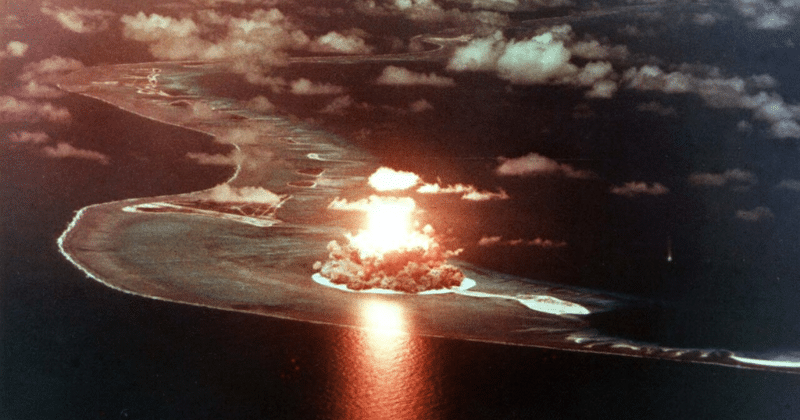

Thousands of service members helped remove radioactive soil and debris from Enewetak Atoll after years of nuclear testing. Veterans who took part in that cleanup may now qualify for VA disability compensation for cancers diagnosed long after their military service ended.
The PACT Act recognizes the Enewetak cleanup as a radiation-risk activity. Veterans with qualifying cleanup service and a covered cancer can receive presumptive service connection without proving that a particular radiation dose caused their disease.
- Veterans must document participation in the cleanup between Jan. 1, 1977, and Dec. 31, 1980, and a covered diagnosis.
- Qualifying Enewetak cleanup service can establish presumptive service connection for 21 listed cancers.
- A missing service record or a diagnosis that is not on the list can lead to a denial.
- Surviving family members may qualify for benefits (DIC) or continue an appeal that remained pending when the veteran died. Hill & Ponton offers assistance for both.
What Was the Enewetak Atoll Cleanup?
The United States conducted 43 nuclear tests at Enewetak Atoll between 1948 and 1958. The atoll, in the Marshall Islands, later became the site of a large military cleanup intended to address the contamination those tests left behind.
The government began planning the project in the early 1970s after deciding to return the atoll to the Trust Territory of the Pacific Islands. The cleanup lasted from May 1977 through May 1980, cost roughly $100 million, and, according to the Defense Threat Reduction Agency, involved an on-atoll task force of nearly 1,000 personnel at a time.
VA places total participation at approximately 6,000 veterans over the three years. The cleanup crews wore protective clothing and radiation dose measuring devices when needed, underwent regular radiation checks, and had restricted access to the more contaminated islands.
The contaminated soil and debris collected from across the atoll was placed in a crater on Runit Island and sealed under a concrete cap, known as the Cactus Crater Containment Structure, or Runit Dome. The United States returned the atoll to the Marshall Islands in 1986 and every island other than Runit is accessible today.
Are Enewetak Atoll Cleanup Veterans Presumed to Have Been Exposed to Radiation?
Yes, VA considers a veteran who took part in the cleanup of Enewetak Atoll to be a radiation-exposed veteran. Under 38 C.F.R. § 3.309(d), participation in the cleanup from Jan. 1, 1977, through Dec. 31, 1980, qualifies as a radiation-risk activity.
The PACT Act, enacted Aug. 10, 2022, added the Enewetak cleanup to the list of recognized radiation-risk activities, along with the responses to the nuclear weapons accidents at Palomares, Spain, and at Thule Air Force Base, Greenland.
See how to claim Radiation exposureFor a veteran with qualifying participation and a listed cancer, the presumption generally supplies the medical connection between the disease and service. The veteran does not need a separate medical opinion proving that a specific radiation dose caused that cancer.
This distinction is especially important for veterans whose records contain a low dose reading or lack a complete individual exposure history. The presumptive route focuses on qualifying participation and the covered diagnosis, subject to VA’s other eligibility requirements.
What Records Prove Enewetak Atoll Cleanup Service?
A DD-214 may not identify Enewetak Atoll, particularly when a veteran served there on temporary duty. Personnel records, assignment orders and travel documents may provide the dates and duties that the discharge document leaves out.
Helpful evidence can include unit histories, performance records and DD Form 1141, Record of Occupational Exposure to Ionizing Radiation, when the military maintained one. A buddy statement can also describe firsthand knowledge of the veteran’s assignment, work and presence on the atoll.
The Defense Threat Reduction Agency, or DTRA, maintains historical information relevant to radiation claims. Through its Nuclear Test Personnel Review program, the agency provides participation information and radiation-dose assessments used in VA and Department of Justice claim reviews.
Participation records and dose records serve different purposes. Records that establish cleanup service may support a presumptive claim even when the veteran does not have a complete record of measured radiation exposure.
What Conditions Qualify for VA Disability Benefits After Enewetak Atoll Radiation Exposure?
VA’s radiation presumption covers the following 21 listed cancers and cancer categories when the veteran meets the qualifying-service requirements:
- Leukemia, other than chronic lymphocytic leukemia
- Thyroid cancer
- Breast cancer
- Pharynx cancer
- Esophageal cancer
- Stomach cancer
- Small intestine cancer
- Pancreatic cancer
- Multiple myeloma
- Lymphomas, except Hodgkin’s disease
- Bile duct cancer
- Gallbladder cancer
- Primary liver cancer, except when cirrhosis or hepatitis B is indicated
- Salivary gland cancer
- Urinary tract cancer, including the kidneys, renal pelves, ureters, urinary bladder and urethra
- Bronchiolo-alveolar carcinoma
- Bone cancer
- Brain cancer
- Colon cancer
- Lung cancer
- Ovarian cancer
A condition outside this list may still qualify through the separate radiogenic-disease review process. This process provides additional claim development rather than an automatic presumption for a radiogenic disease (an illness that’s potentially caused by radiation).
For other exposure claims under § 3.311(a)(2)(iii), VA gathers available radiation records and forwards them to the Under Secretary for Health for a dose estimate, to the extent feasible. When the referral requirements are met, the Under Secretary for Benefits reviews the claim and may request an advisory medical opinion.
That review considers the probable dose, the veteran’s age and family history, the time between exposure and diagnosis, and other exposure to cancer-causing substances.
An outside medical consultant is not mandatory in every case. Referral applies when the Under Secretary for Benefits cannot reach either conclusion specified in the regulation: that a relationship is at least as likely as not, or that no reasonable possibility exists.
A separate procedure addresses materially different dose estimates. When a qualifying estimate from a credible source conflicts materially with official military data, an independent expert selected by the director of the National Institutes of Health prepares another estimate. The regulation ordinarily treats a difference as material when one estimate is at least double the other.
Veterans may also establish direct service connection through medical evidence connecting the disease to their documented military exposure.
Learn How To File And Win Your VA Claim
Get our FREE book The Road to VA Compensation Benefits.
get the free book
How Has the Board of Veterans’ Appeals Ruled on Enewetak Atoll Cleanup Claims?
A Hill & Ponton analysis of 46 BVA decisions in which Enewetak cleanup exposure was the basis for a claimed or adjudicated disability found 12 decisions with at least one grant, 11 with at least one denial, and 31 with at least one remand (a “remand” is a decision sending the claim back to the VA for further work, rather than a final ruling). These figures are not a VA-wide approval rate or a prediction of an individual claim’s outcome but they can show how the Board addressed the evidence and legal questions in the reviewed appeals.
Why Claims Were Granted
The reviewed grants followed three main paths: presumptive service connection, secondary service connection and direct medical evidence supporting a condition outside the presumptive list. The first, and the strongest, combined documented cleanup service with a cancer on the presumptive list, which avoided any need to prove that the veteran’s individual radiation dose caused the disease.
The presumptive route appears in Citation No. 23024505, decided April 27, 2023. The veteran reported cleanup service from April through September 1978, while military radiation records covered dates from March through September 1978. Those records documented an accumulated dose of 0.011 rem, a unit used to measure radiation dose.
The Board found that the veteran had participated in a qualifying radiation-risk activity and identified the digestive-system disability as colon cancer. It granted service connection under the PACT Act’s presumption.
The same decision illustrates secondary service connection. Medical records showed that the digestive-system cancer had spread to the liver and lungs. The Board granted service connection for the liver and lung cancers as secondary to the newly service-connected digestive-system disability.
More broadly, secondary service connection may apply when a service-connected disease causes or aggravates another disability. The medical evidence must establish that relationship.
The third path involved conditions outside the presumptive list. Since these claims had no presumption to rely on, the grants were based on medical evidence connecting the diagnosis to the veteran’s duties, exposure history, time between exposure and illness, and individual medical history.
Why Claims Were Denied
When the diagnosis falls outside the presumptive list, VA must evaluate whether the evidence establishes a medical connection to service. In Citation No. A26026419, decided March 24, 2026, the Board accepted that the veteran participated in the cleanup from September 1978 to February 1979. The veteran’s DD Form 1141 recorded 0.008 rem of gamma and X-ray exposure.
The Board also considered DTRA’s later dose reconstruction. That assessment estimated up to 0.3 rem of external gamma exposure, along with separate internal-dose estimates. However, the Board denied service connection for rectal cancer after finding the unfavorable VA opinion more convincing. That opinion considered the dose evidence, the approximately 41-year interval before diagnosis, smoking history and other medical factors.
Other denials involved opinions that did not adequately address competing risk factors, including smoking, family history, age or cardiovascular disease. A veteran’s account may establish working conditions, while the cause of a medically complex disease generally requires clinical evidence.
The appeal option can also affect the available evidence. Under the Board’s Direct Review option, the judge considers the record available at the time of the agency decision under review. New evidence generally requires a different permitted evidence process or a Supplemental Claim.
Why Claims Were Remanded
- Unverified cleanup participation: the Board directed VA to obtain personnel records, unit histories, duty assignments, travel records, or other evidence showing whether and when the veteran served at Enewetak.
- Incomplete radiation development: VA had not requested available dose information, prepared a dose estimate, or referred the claim to the appropriate VA officials under 38 CFR 3.311.
- Inadequate medical opinions: examiners relied solely on the fact that the condition is not presumptive, did not address the confirmed cleanup duties, overlooked favorable evidence, or did not discuss direct service connection.
- Outstanding records: service personnel files, treatment records, private medical records, pathology reports, Social Security records, and records identifying the primary site of a cancer.
- Multiple exposure theories: radiation, herbicide, asbestos, or contaminated water, with VA considering only one of the alleged exposures.
Does the Radiation Exposure Compensation Act Cover Enewetak Atoll Cleanup Veterans?
Cleanup service from 1977 through 1980 does not, by itself, qualify for RECA’s onsite-participant category. The Radiation Exposure Compensation Act, administered by the Department of Justice, provides qualifying onsite participants a $100,000 lump-sum payment. The category covers participation in qualifying atmospheric nuclear tests conducted before Jan. 1, 1963, followed by a covered disease.
Congress reauthorized RECA through the One Big Beautiful Bill Act, Public Law 119-21, enacted July 4, 2025. Since the Enewetak cleanup took place from 1977 to 1980, well after that date, cleanup-only service does not meet the definition. However, a veteran who was also present at Enewetak during the 1948 to 1958 test series, or at another qualifying test, may still have a RECA claim based on that earlier service, separate from a VA claim based on the later cleanup.
RECA claims must be filed by Dec. 31, 2027 and an onsite-participant award is offset by VA compensation already received for the same illness. A veteran whose only qualifying service was the cleanup should seek VA disability. The applicable path depends on the diagnosis and whether the claim meets the presumptive rules or requires additional medical development.
What Survivor Benefits Are Available for Families of Enewetak Atoll Cleanup Veterans?
An eligible surviving spouse, child or parent may qualify for Dependency and Indemnity Compensation, or DIC, when a service-connected disability caused or contributed substantially or materially to the veteran’s death. If VA denies the claim, Hill & Ponton’s DIC lawyers can assist survivors in obtaining the compensation they deserve.
A survivor may also seek substitution to continue a claim or appeal that remained pending when the veteran died (substitution concerns the pending claim and any benefits owed through it, while DIC concerns the survivor’s separate entitlement based on the veteran’s death).
Hill & Ponton’s analysis of Board of Veterans’ Appeals between 2021 and 2025 identified three claim streams covering 14 issues: three granted issues, two denied issues and nine issues that remained unresolved after remand. Most were substitution cases, in which a surviving spouse is allowed to “step into the shoes” of the veteran and continue a claim that was pending when the veteran died, rather than separate DIC appeals.
A substituted appeal can nevertheless produce evidence important to a survivor’s DIC claim. Establishing service connection for the fatal disease could support a separate DIC claim or review of a DIC denial, subject to the applicable requirements.
How Can Veterans and Survivors Get Compensation for an Enewetak Atoll Claim?
The first step after a denial is identifying the missing evidence or disputed finding. A participation dispute may require service records. A non-presumptive diagnosis may require a more complete medical opinion or proper radiation-dose development.
For survivors, VA does not need to have established service connection during the veteran’s lifetime for a later DIC claim to succeed. The evidence must prove the relevant service connection and the disease’s role in the death.
When the disease is presumptive, qualifying cleanup records and the covered diagnosis can establish its connection to service. The survivor must still show eligibility and that the disease caused or substantially or materially contributed to the death.
Free Case Evaluation for a Denied Enewetak Atoll Claim
Did VA deny your claim? Hill & Ponton’s attorneys can review the decision and identify the evidence and appeal options best suited to your situation, with no fee unless we win the appeal. Request a free case evaluation to see how we can help.
Get a Free evaluationContent Reviewed By

Stacey Clark
Attorney, Hill & Ponton, P.A.
Attorney Stacey Clark is a native Floridian and has represented veterans before the VA, BVA, CAVC, and other federal courts with over 10 years of hands-on experience. She is the only attorney practicing veterans law who has been recognized as a Florida Rising Star by Florida Super Lawyer Magazine; an award that only 2.5% of Florida attorneys have received.
Written By

Michallie Harrison
Michallie K. Harrison is a retired U.S. Army Sergeant First Class with 21 years of service, including three combat tours. She holds a Bachelor of Arts in Liberal Studies with an emphasis in history, criminal justice, and administration and is currently pursuing a second bachelors degree in mass communications with a minor in creative writing. A 100% permanently and totally disabled veteran as rated by the Department of Veterans Affairs, she applies her background in military journalism and investigative research to produce precise, analytical, and well-researched work.